

I gatti vivono in un delicato equilibrio tra il comfort degli spazi interni e il mondo selvaggio esterno. Il loro comportamento sulla soglia – fermarsi, annusare o esitare – rivela un misto di istinto, consapevolezza sensoriale ed emozione. Sia che si soffermino vicino a una porta, appollaiati su un davanzale, o che marchino il loro territorio, questi momenti ci mostrano come i gatti navighino il loro ambiente con precisione e scopo.
I loro sensi finemente sintonizzati – baffi che rilevano le correnti d'aria, orecchie che localizzano i suoni in un istante e occhi che si adattano alla scarsa illuminazione – li aiutano a sentirsi a casa in entrambi gli spazi. Sebbene molti gatti vivano ora esclusivamente al chiuso, i loro istinti naturali rimangono. Continuano a pattugliare, osservare e prendere decisioni sulla sicurezza e il comfort, anche entro i confini di una casa.
I movimenti dei gatti sono intenzionali, sia che stiano salendo su un trespolo alto al chiuso o seguendo un percorso familiare all'esterno. Le loro routine li connettono all'ambiente circostante, creando un senso di sicurezza. Osservare un gatto muoversi tra gli spazi ci insegna la consapevolezza, l'adattabilità e l'importanza di sentirsi radicati mentre si esplorano nuove possibilità.
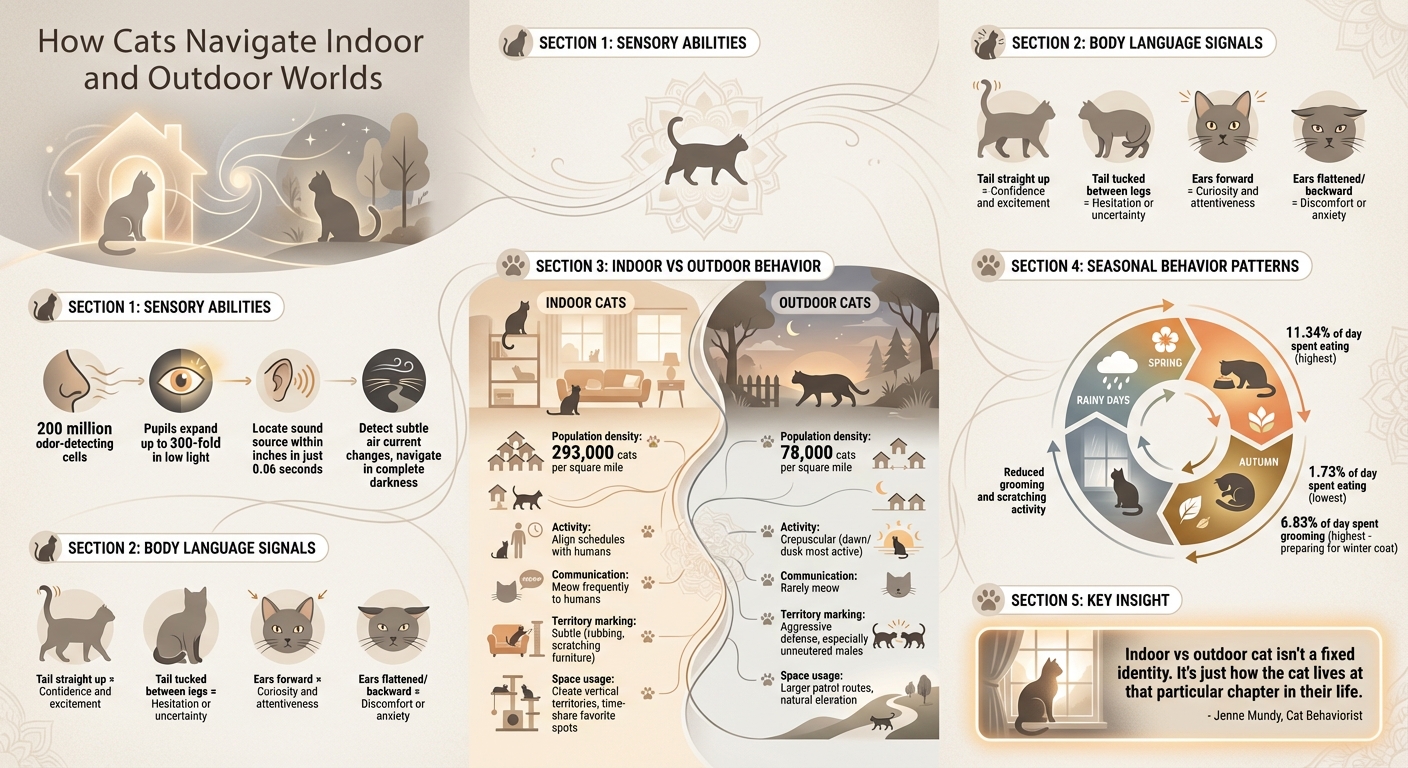
Comportamento del gatto da interno vs da esterno: differenze chiave e statistiche
Il lato emotivo del movimento dei gatti tra gli spazi
Quando un gatto esita sulla soglia, è più di una semplice pausa: è un momento di contemplazione. Le loro emozioni durante queste transizioni sono espresse attraverso sottili segnali fisici, offrendo uno scorcio nel loro mondo interiore. Ad esempio, una coda tenuta dritta verso l'alto mentre si avvicinano a una porta riflette fiducia ed eccitazione per ciò che li attende. D'altra parte, una coda infilata tra le zampe segnala esitazione o incertezza, rivelando uno stato d'animo più vulnerabile.
Anche le orecchie svolgono un ruolo cruciale nel decodificare i loro sentimenti. Le orecchie rivolte in avanti suggeriscono curiosità e attenzione, mentre le orecchie appiattite o rivolte all'indietro indicano disagio, sovra stimolazione o ansia. Questi movimenti piccoli ma espressivi aiutano i gatti a navigare il peso emotivo del movimento tra gli spazi, offrendoci un'intuizione del loro complesso linguaggio corporeo.
"Strofinandosi intorno alle nostre gambe quando ci salutano, i gatti mostrano che ci considerano amichevoli ma allo stesso tempo leggermente superiori a loro." - John Bradshaw, Visiting Fellow, Università di Bristol
Leggere il linguaggio del corpo del tuo gatto
Questi segnali emotivi sono spesso accompagnati da movimenti intenzionali. Se osservi un gatto sulla soglia di una porta, noterai che raramente si precipita senza fermarsi ad analizzare la situazione. Potrebbe anche eseguire la risposta di Flehmen – un momento in cui apre leggermente la bocca per attirare gli odori verso l'organo di Jacobson. Questo comportamento sensoriale unico gli permette di analizzare la "storia olfattiva" dello spazio in cui sta per entrare.
Le vocalizzazioni sono un altro strato della loro comunicazione. Mentre i gatti selvatici raramente miagolano, quelli che vivono con gli umani hanno adattato questo comportamento per attirare la nostra attenzione – in particolare quando desiderano accedere a uno spazio diverso. È interessante notare che le fusa durante le transizioni a volte possono segnalare stress anziché contentezza, agendo come un meccanismo di auto-calmante quando un gatto si sente incerto riguardo all'ambiente circostante.
Lo sfregamento della testa e del muso sugli stipiti delle porte, sebbene spesso visto come affettuoso, è anche un comportamento pratico. Utilizzando le ghiandole odorifere situate sul muso, i gatti marcano il loro territorio, lasciando una rassicurante traccia olfattiva. Questa abitudine li aiuta a sentirsi più sicuri mentre si muovono tra gli spazi, creando confini invisibili che solo loro possono rilevare.
Come i gatti formano legami con spazi diversi
Questi comportamenti fanno più che riflettere emozioni immediate: costruiscono anche legami duraturi con gli spazi che i gatti abitano. I gatti non vedono le aree interne ed esterne come mondi separati; piuttosto, le considerano parti di un territorio più ampio e unificato. Per molti, l'esterno fornisce uno sbocco essenziale per gli istinti naturali come la caccia e la pattuglia, anche se la loro esperienza è limitata all'osservazione attraverso una finestra. Questa connessione può essere così forte che la reclusione in casa può portare a problemi emotivi. Ad esempio, i gatti siamesi e le razze affini possono sviluppare un pelo più scuro in ambienti interni più freschi a causa di geni sensibili alla temperatura.
"Gatto da interno o da esterno non è un'identità fissa. È solo come il gatto vive in quel particolare capitolo della sua vita." - Jenne Mundy, Comportamentista felina
Il legame non è unilaterale. I gatti randagi sviluppano spesso un profondo attaccamento agli spazi interni, considerandoli santuari, in netto contrasto con l'imprevedibilità della vita all'aperto. Questi gatti potrebbero mostrare scarso interesse a avventurarsi fuori, preferendo la sicurezza e il comfort del loro nuovo ambiente. Osservare il comportamento del tuo gatto – che si lanci verso le porte, si soffermi tra gli spazi o si diriga verso certi punti – può rivelare quali aree sentono più connesse. Queste preferenze derivano da una combinazione di esperienze sensoriali, ricordi e un naturale bisogno sia di sicurezza che di stimolazione.
Comprendere queste dinamiche ci permette di vedere come i gatti integrano il loro ambiente in un tutt'uno significativo, plasmato dalle loro emozioni e istinti. Le loro scelte non sono casuali, ma riflettono un profondo legame con gli spazi che chiamano casa.
sbb-itb-b6c1dc0
Come i gatti utilizzano lo spazio per muoversi tra l'interno e l'esterno
I gatti non si limitano a muoversi nel loro ambiente, lo modellano con intenzione. La loro capacità di connettere il mondo interno ed esterno dipende spesso da come si adattano alle caratteristiche fisiche che li circondano. Un davanzale, ad esempio, diventa un punto di osservazione dove i gatti domestici tengono d'occhio gli uccelli o altri gatti all'esterno. La parte superiore di un frigorifero si trasforma in un posatoio sicuro, imitando i luoghi elevati che cercherebbero naturalmente in natura. Queste scelte non sono casuali; riflettono una strategia deliberata per fondere il loro santuario interno con il mondo esterno più ampio. Questo comportamento rivela come i gatti navigano e definiscono i loro territori, anche in spazi limitati.
Una ricerca su 14 gatti domestici che vivono in una casa di 120 metri quadrati ha evidenziato come, anche in ambienti più piccoli, i gatti creano aree di riferimento e punti preferiti distinti. È interessante notare che i gatti spesso "condividono il tempo" in questi spazi, alternandosi nell'utilizzo dello stesso davanzale o posatoio alto in momenti diversi della giornata per evitare conflitti. Questo comportamento diventa particolarmente importante nelle case con più gatti, dove le densità possono raggiungere livelli sorprendenti. Le popolazioni di gatti domestici sono state osservate raggiungere i 293.000 gatti per miglio quadrato, rispetto ai soli 78.000 per miglio quadrato all'esterno.
"I gatti sono molto più sensibili dei cani a qualsiasi cambiamento nel loro ambiente perché sono animali territoriali che traggono il loro senso di sicurezza dal luogo in cui vivono."
– John Bradshaw, Visiting Fellow, Scuola di Scienze Veterinarie dell'Università di Bristol
Perché i gatti si arrampicano e usano lo spazio verticale in casa
L'altezza è essenziale per i gatti. Salire in cima a una libreria o riposare su un tiragraffi rispecchia i territori verticali che stabilirebbero naturalmente all'aperto. Non si tratta solo di avere una vista migliore, ma di sentirsi sicuri e mantenere il controllo sul proprio spazio. Questi punti elevati permettono ai gatti di soddisfare il loro bisogno istintivo di pattugliare e sorvegliare l'ambiente circostante, anche all'interno dei confini di una casa.
Senza accesso a spazi verticali come strutture per arrampicarsi o posatoi elevati, i gatti che vivono in casa possono sperimentare una deprivazione sensoriale. Ciò è particolarmente vero per i gatti maschi, che tendono a utilizzare più stanze e a mantenere territori più ampi rispetto alle femmine. Lo spazio verticale diventa una parte vitale del loro benessere, fornendo sia stimolazione che un senso di controllo.
Il legame tra l'arrampicata interna e gli istinti esterni è innegabile. Un gatto appollaiato su un davanzale non si limita a osservare il mondo che passa: sta attivamente mettendo in gioco le sue notevoli capacità sensoriali. Le sue 200 milioni di cellule che rilevano gli odori e le pupille che possono espandersi fino a 300 volte in condizioni di scarsa illuminazione gli consentono di tracciare anche i più deboli movimenti all'esterno. Tuttavia, questa connessione con l'esterno a volte può ritorcersi contro. Vedere un gatto rivale attraverso il vetro può provocare stress territoriale, portando a un comportamento frenetico o ad aggressioni reindirizzate verso altri animali domestici o persone in casa.
Come i gatti creano schemi di movimento nel loro ambiente
Se ti prendi il tempo di osservare un gatto, noterai che i suoi movimenti sono tutt'altro che casuali. Seguono percorsi di pattugliamento specifici, percorrendo gli stessi sentieri durante il giorno. Questi percorsi collegano risorse chiave – come ciotole di cibo, lettiere, punti per dormire e punti di osservazione. Anche quando passano tra interno ed esterno, i gatti si affidano a questi schemi consolidati per mantenere un senso di sicurezza. I loro percorsi a livello del suolo funzionano perfettamente con le loro esplorazioni verticali.
Questo comportamento è profondamente legato ai loro istinti territoriali. I gatti usano baffi specializzati, chiamati vibrisse, per rilevare sottili cambiamenti nelle correnti d'aria, permettendo loro di navigare i loro percorsi anche in completa oscurità. Il loro udito acuto supporta ulteriormente questo, aiutandoli a raccogliere informazioni spaziali mentre si muovono. I gatti creano anche ciò che i ricercatori chiamano "zone di decompressione" – spazi tranquilli come lavanderie o garage dove si fermano e si adattano quando si muovono tra la sicurezza degli interni e la stimolazione del mondo esterno. Queste aree di transizione li aiutano a colmare il divario tra due ambienti molto diversi.
Interrompere questi schemi consolidati può causare stress significativo ai gatti. Qualcosa di semplice come riorganizzare i mobili o bloccare un percorso familiare può farli sentire a disagio. Per i gatti, questi schemi di movimento agiscono come una mappa di sicurezza, guidandoli mentre bilanciano le loro vite tra il comfort di casa e l'intrigo dell'esterno.
Come si comportano i gatti in ambienti interni ed esterni
I gatti vivono in un affascinante equilibrio tra il loro bisogno di sicurezza e il loro istinto di esplorazione. Per i gatti domestici, il miagolio diventa il loro modo principale di comunicare con gli umani, sia che chiedano cibo, attenzione o semplicemente interazione. È interessante notare che questo comportamento è raramente osservato nei gatti selvatici. In natura, il silenzio è fondamentale per la sopravvivenza, aiutandoli a evitare predatori e rivali. Il miagolio, quindi, è qualcosa che i gatti hanno adattato specificamente per le loro interazioni con noi.
"Il suono caratteristico del gatto domestico, il miagolio, non si sente quasi mai nelle colonie di gatti selvatici... I gatti che vivono con gli umani, tuttavia, imparano che miagolare è un buon modo per attirare la nostra attenzione."
– John Bradshaw, Visiting Fellow, Scuola di Scienze Veterinarie dell'Università di Bristol
Oltre alle vocalizzazioni, le loro routine quotidiane riflettono anche il loro ambiente. I gatti che vivono all'aperto seguono spesso ritmi crepuscolari, essendo più attivi all'alba e al tramonto quando le prede sono abbondanti. Al contrario, i gatti domestici tendono ad allineare i loro orari con i loro compagni umani, adattando la loro attività alle routine della casa.
Perché i gatti marcano il territorio e cosa significa
Marcarare il territorio è una parte essenziale della vita di un gatto, sia che viva in casa o all'aperto. I gatti esterni spesso difendono il loro spazio in modo più aggressivo, specialmente i maschi non castrati che litigano per risorse come cibo o partner. I gatti domestici, tuttavia, si affidano a metodi più sottili. Strofinarsi contro i mobili o graffiare le superfici serve a stabilire la loro presenza e a rafforzare il loro senso di sicurezza. Questo comportamento riflette anche le dinamiche sociali, poiché i gatti più piccoli o meno dominanti possono strofinarsi contro quelli più grandi per riconoscere il loro posto nella gerarchia.
Per i gatti abituati alla vita all'aperto, essere confinati in casa può essere una transizione stressante. Senza la possibilità di marcare un territorio più ampio, potrebbero mostrare stress attraverso comportamenti come graffiare eccessivamente i mobili o evitare la lettiera.
Come il tempo cambia la routine quotidiana di un gatto
Il clima ha un impatto notevole sul comportamento di un gatto, soprattutto per quelli che si avventurano all'aperto. La pioggia non impedisce ai gatti di muoversi, ma influenza le loro attività. Ad esempio, gli studi dimostrano che i gatti trascorrono meno tempo a strigliarsi e a graffiare nei giorni di pioggia. Anche i cambiamenti stagionali influenzano le loro abitudini alimentari: la primavera vede la più alta percentuale di tempo trascorso a mangiare (circa l'11,34% della loro giornata), mentre l'autunno segna la più bassa, solo l'1,73%. La toelettatura, d'altra parte, raggiunge il picco in autunno, quando i gatti si preparano per il freddo, dedicando circa il 6,83% della loro giornata a mantenere il loro pelo più spesso.
I gatti domestici, che vivono in ambienti a clima controllato, sperimentano molti meno cambiamenti stagionali. Le loro routine rimangono costanti, con schemi coerenti di camminare, riposare e giocare. Sebbene questa prevedibilità possa essere confortante per i gatti che prosperano con la routine, significa anche che perdono i ritmi naturali e le esperienze sensoriali della vita all'aperto. Osservare questi comportamenti può ricordarci quanto i gatti siano adattabili, e forse ispirarci a riflettere su come ci adattiamo ai cambiamenti nel nostro ambiente.
Cosa ci può insegnare l'osservazione dei gatti sull'essere presenti
I gatti hanno una straordinaria capacità di vivere nel presente, offrendoci una lezione di consapevolezza attraverso il loro comportamento naturale. Gli studi rivelano che i gatti percepiscono il tempo in brevi intervalli, concentrandosi su ciò che sta accadendo nel momento piuttosto che indugiare sul passato o anticipare il futuro. Ad esempio, quando un gatto si ferma sulla soglia di una porta, le orecchie che ruotano per cogliere ogni suono, è completamente immerso nel momento presente. Non c'è eccesso di pensiero o pianificazione, solo un puro coinvolgimento con l'ambiente circostante. Questa presenza senza sforzo, proprio come i gatti fondono la tranquillità della vita in casa con l'energia dell'esterno, ci ricorda di affrontare le transizioni della vita con un simile senso di consapevolezza.
Come i gatti si muovono lentamente e rimangono concentrati
I movimenti deliberati di un gatto sono una lezione magistrale su come rallentare e prestare attenzione. Con la capacità di localizzare la fonte di un suono entro pochi centimetri in soli 0,06 secondi, i gatti dimostrano una precisione uditiva incredibile. La loro attenzione è acuta, eppure non si tratta di affrettarsi, ma di percepire. I baffi agiscono come strumenti finemente sintonizzati, rilevando anche i più piccoli cambiamenti, mentre la loro vista privilegia il movimento rispetto a dettagli inutili. Questa consapevolezza sensoriale permette loro di rimanere radicati nel loro ambiente.
"I gatti fanno le fusa perché hanno qualcosa da dire, che tradotto approssimativamente significa 'per favore, stai fermo e prestami attenzione'." – John Bradshaw, Visiting Fellow, Scuola di Scienze Veterinarie dell'Università di Bristol
Possiamo prendere esempio da loro, praticando una consapevolezza simile nella nostra vita. Prima di entrare in un nuovo spazio – che sia la tua casa dopo una lunga giornata o una sala riunioni – fermati. Fai un respiro profondo. Nota i suoni, la temperatura, la consistenza del pavimento sotto i tuoi piedi. Come i gatti, possiamo usare una sorta di "messa a fuoco morbida" per sintonizzarci sul flusso del nostro ambiente, invece di lasciarci appesantire da piccole distrazioni o fattori di stress.
Imparare l'equilibrio osservando la transizione dei gatti
I gatti ci mostrano anche l'arte dell'equilibrio, in particolare nel modo in cui gestiscono le transizioni. Il loro famoso riflesso di raddrizzamento, che li aiuta ad atterrare con grazia anche dopo una caduta, è una testimonianza della loro adattabilità. Estendendo le zampe per rallentare la discesa e inarcando la schiena per assorbire l'impatto, i gatti dimostrano come ricalibrarsi e ritrovare l'equilibrio nei momenti difficili. Questa abilità fisica rispecchia la resilienza emotiva che possiamo coltivare nella nostra vita.
I gatti navigano anche le transizioni tra gli spazi con attenzione, offrendo una preziosa lezione sulla creazione di zone cuscinetto. Ad esempio, molti proprietari di gatti allestiscono spazi intermedi, come portici o lavanderie, dove i loro gatti possono fermarsi e adattarsi prima di entrare completamente in un nuovo ambiente. Possiamo adottare un approccio simile integrando piccoli rituali nella nostra giornata: prendersi cinque minuti per sedersi in silenzio in macchina prima di entrare in casa, o fare una breve passeggiata prima di immergersi nel lavoro. Questi momenti intenzionali di pausa ci aiutano a muoverci nella vita con grazia, proprio come un gatto "audizione" uno spazio prima di stabilirvisi.
Conclusione: Cosa ci mostrano i gatti sul muoversi tra i mondi
I gatti ci ricordano che i confini – tra lavoro e casa, sicurezza e avventura, immobilità e movimento – non devono essere rigidi. La loro facilità nel navigare gli spazi interni ed esterni riflette una verità più profonda: l'identità è fluida. Come spiega la comportamentista felina Jenne Mundy:
"Gatto da interno o da esterno non è un'identità fissa. È solo come il gatto vive in quel particolare capitolo della sua vita."
Questa idea si applica anche alle nostre vite. Possiamo adattarci, ridefinire i nostri bisogni e scoprire nuovi modi di prosperare al variare delle circostanze. I gatti ci mostrano che questa flessibilità – sia nel modo in cui vediamo noi stessi che nel modo in cui sperimentiamo il mondo – può portare alla crescita.
Attraverso i loro sensi acuti e la loro presenza radicata, i gatti offrono un'altra lezione: non analizzano o pianificano eccessivamente; rispondono a ciò che hanno di fronte. Questa capacità di rimanere presenti, pur rimanendo profondamente connessi all'ambiente circostante, evidenzia l'importanza di essere radicati in uno spazio pur abbracciando l'esplorazione.
Un altro aspetto fondamentale è l'arte della negoziazione. I gatti la padroneggiano adattando i loro comportamenti ai loro ambienti. Ad esempio, sviluppano modi specifici di comunicare con gli umani, come il miagolio, pur rimanendo silenziosi con gli altri gatti. Adattano le loro routine per accomodare i cambiamenti del tempo, delle stagioni o delle opportunità. In casa, creano percorsi verticali per soddisfare i loro istinti di arrampicata quando l'accesso all'esterno non è un'opzione. Questo tipo di flessibilità, ancorata a una base domestica sicura, permette loro di muoversi con grazia tra mondi apparentemente opposti.
Un esempio lampante di questo equilibrio viene da un gatto delle nevi di nome TK. Quando era confinato in casa, il mantello di TK si scuriva da color caramello a un profondo cioccolato e il suo comportamento diventava meno vivace. Tuttavia, con l'accesso supervisionato all'esterno, il suo colore originale è tornato, insieme a un umore migliorato. Questo dimostra come i gatti riflettano fisicamente gli ambienti in cui vivono e come trovare il giusto equilibrio possa trasformare il loro benessere.
Proprio come i gatti creano zone cuscinetto tra l'interno e l'esterno, anche noi possiamo progettare spazi e rituali di transizione per aiutarci a muoverci tra i diversi aspetti della nostra vita. Come un gatto che si ferma sulla soglia, questi rituali possono radicarci incoraggiando l'esplorazione e la crescita.
Domande frequenti
Perché il mio gatto esita sulle soglie?
I gatti spesso si fermano sulle soglie perché questi spazi fungono da confine tra ambienti distinti. Questa esitazione deriva dal loro istintivo mix di curiosità e cautela. Amano valutare attentamente l'ambiente circostante, assicurandosi di sapere cosa li aspetta prima di varcare la soglia. A volte, questa pausa riflette incertezza o il desiderio di mantenere il controllo sul proprio ambiente. Riconoscendo questo comportamento, i proprietari di gatti possono supportare meglio i loro amici felini, rendendo le transizioni tra spazi interni ed esterni più confortevoli e rassicuranti.
Come posso rendere una casa interna "ricca di elementi esterni" per il mio gatto?
Per portare un tocco di natura nella tua casa per il tuo gatto, pensa a modi per coinvolgere i suoi sensi e stimolare la curiosità. Un tiragraffi da finestra può offrire ore di divertimento, permettendogli di osservare uccelli, scoiattoli o semplicemente godersi la luce del sole. L'aggiunta di piante sicure per i gatti, come piante ragno o erba gatta, introduce elementi naturali che possono esplorare in sicurezza. Giocattoli che imitano le prede, come bacchette con piume o topi motorizzati, attingono ai loro istinti di caccia e li mantengono attivi.
Alterna regolarmente i loro giocattoli per mantenere le cose fresche ed eccitanti. Potresti anche incorporare texture naturali, come tiragraffi in sisal o morbide zone di erba gatta sicura, per dare loro una varietà di superfici con cui interagire. Intrecciando questi elementi nella tua casa, crei un ambiente vivace e arricchente che soddisfa i loro istinti mantenendoli al sicuro in casa.
Cosa posso fare se il mio gatto si stressa vedendo altri gatti attraverso le finestre?
Se il tuo gatto si stressa avvistando altri gatti attraverso le finestre, puoi aiutarlo creando un'atmosfera più rilassante a casa. Considera l'uso di diffusori o spray ai feromoni, che possono alleviare la loro ansia. Fornire arricchimento sensoriale, come giocattoli coinvolgenti o attività interattive, può anche reindirizzare la loro attenzione e mantenerli intrattenuti. Assicurati che abbiano posti comodi dove nascondersi dove possono ritirarsi e sentirsi al sicuro. Mantenere una routine quotidiana coerente è un altro modo per aiutarli a sentirsi più sicuri e meno infastiditi da ciò che accade all'esterno.


Lascia un commento