

Katzen haben die unheimliche Fähigkeit, Ihr Zuhause nicht als getrennte Räume, sondern als einen zusammenhängenden Raum zu sehen. Während wir Schlafzimmer, Küchen und Wohnzimmer oft als eigenständige Bereiche mit spezifischen Zwecken betrachten, bewegen sich Katzen nahtlos durch sie hindurch und verweben das, was für uns fragmentiert erscheint. Ihre Bewegungen zeigen, wie Räume sich auf natürliche Weise verbinden können, einfach durch die Art und Weise, wie sie genutzt werden.
Wie Katzen Grenzen aufbrechen
Katzen navigieren nicht nur durch Ihr Zuhause – sie definieren neu, wie Sie seine Räume erleben. Während Sie vielleicht einzelne Räume mit spezifischen Zwecken sehen, sieht eine Katze ein einziges, fließendes Territorium. Diese Perspektive kann das Gefühl eines Zuhauses komplett verändern. Lassen Sie uns die Eigenschaften untersuchen, die es Katzen ermöglichen, diese Grenzen so mühelos zu verwischen.
Warum Katzen Wände und Türen nicht als Grenzen sehen
Katzen sind körperlich so gebaut, dass sie die Barrieren, die wir oft als selbstverständlich betrachten, umgehen können. Ihr einzigartiger Skelettbau, insbesondere ihre nicht befestigten Schlüsselbeine, ermöglicht es ihren Schultern, sich zusammenzuziehen, sodass sie durch jede Öffnung schlüpfen können, durch die ihr Kopf passt. Für eine Katze ist eine halb geöffnete Tür keine Grenze – es ist eine Gelegenheit.
Aber es ist nicht nur ihre körperliche Flexibilität. Katzen haben auch ein unglaubliches Bewusstsein für ihre Körpergröße und -form, wodurch sie Räume und Wege präzise einschätzen können. Eine schmale Lücke zwischen Möbeln ist kein Hindernis – es ist eine Abkürzung. Selbst geschlossene Türen werden weniger als dauerhafte Barrieren denn als vorübergehende Herausforderungen betrachtet, die es zu überwinden gilt.
Wie Katzenbewegungen den Raum neu definieren
Katzen haben eine Art, Ordnung und Fluss in ihrer Umgebung zu schaffen. Sie streifen nicht ziellos umher; stattdessen etablieren sie konsistente Routen, die die verschiedenen Bereiche Ihres Zuhauses miteinander verbinden. Ein sonnenbeschienenes Fensterbrett, eine gemütliche Ecke oder ein hoher Aussichtspunkt im Flur sind nicht nur isolierte Orte – sie sind Teil eines miteinander verbundenen Netzwerks, das den gesamten Raum zusammenhält.
„Ein Ein-Katzen-Zuhause organisiert sich leise um einen Rhythmus. Ein Schlafplatz wird zum Standard. Eine Route durch den Raum wird zum normalen Weg.“ – Design for Pets
Dieser Rhythmus zeigt uns, dass Einheit nicht darin besteht, Wände einzureißen – es geht darum zu verstehen, wie Bewegung Räume miteinander verbindet. Wenn eine Katze anmutig von der Küche ins Schlafzimmer wechselt, zeigt sie, dass Ihr Zuhause bereits das Potenzial für Verbindung besitzt. Ihre Perspektive bietet eine frische Art, darüber nachzudenken, wie Räume fließen können, und bereitet den Boden für die Neugestaltung Ihrer Wohnumgebung.
sbb-itb-b6c1dc0
Wie man sein Zuhause wie eine Katze erlebt
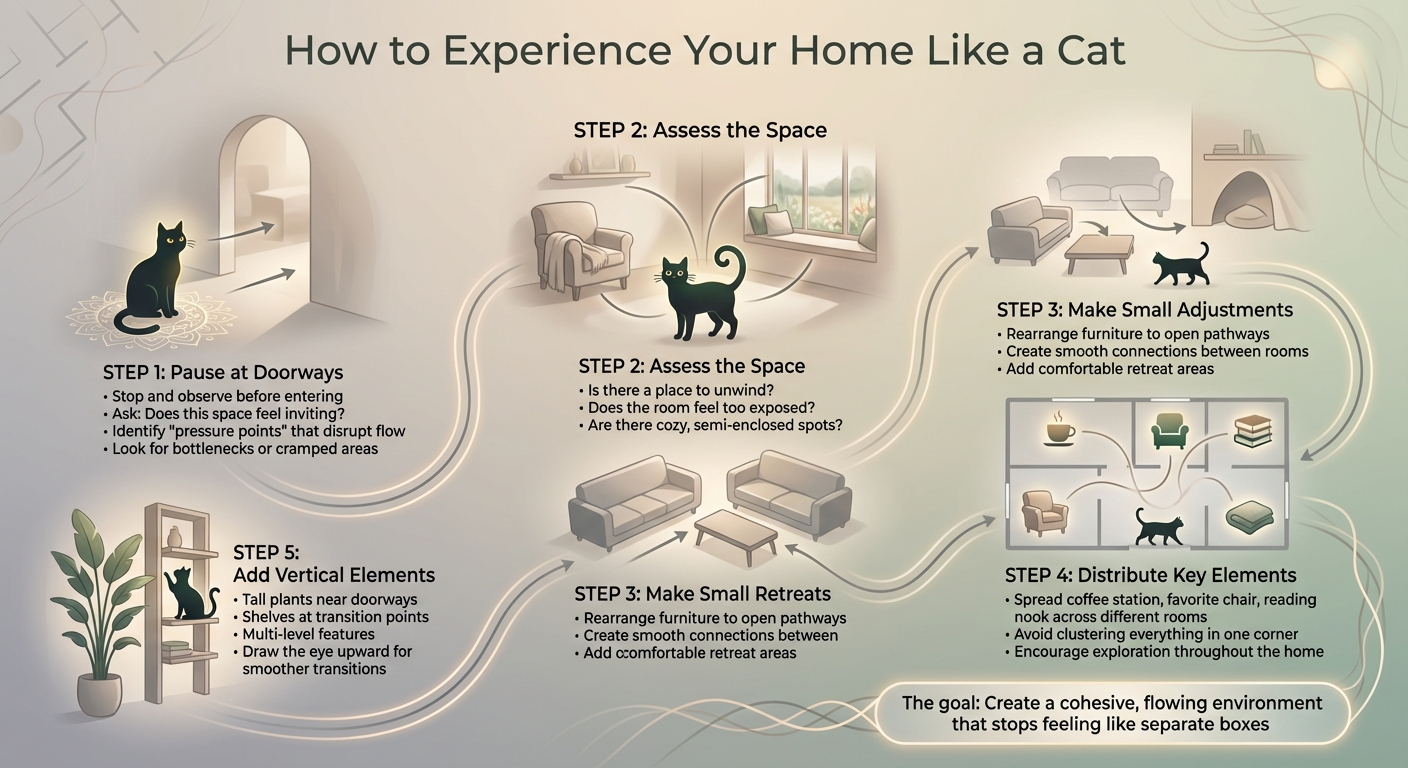
Wie Sie Ihr Zuhause wie eine Katze erleben: Eine Schritt-für-Schritt-Anleitung
Sie müssen keine Wände einreißen, um Ihr Zuhause anders zu sehen. Indem Sie die Art und Weise übernehmen, wie eine Katze mit ihrer Umgebung interagiert, können Sie eine neue Perspektive darauf entdecken, wie sich Ihre Wohnräume verbinden und fließen.
An Türschwellen innehalten und beobachten
Katzen halten oft an Türschwellen inne und nehmen sich einen Moment Zeit, um zu beurteilen, was vor ihnen liegt. Sie entscheiden, ob sie eintreten, bleiben oder weiterziehen. Diese Gewohnheit kann uns lehren, achtsamer mit unseren Übergängen zwischen Räumen umzugehen.
Wenn Sie sich einer Tür nähern, versuchen Sie, einen Moment innezuhalten. Fühlt sich der Raum dahinter einladend an, oder verursacht etwas Zögern? Ist die Tür eine reibungslose Verbindung oder ein Engpass, der Ihre Bewegung stört? Wenn Sie sich eingeengt oder gehetzt fühlen, haben Sie wahrscheinlich einen „Druckpunkt“ gefunden – eine Stelle, die den natürlichen Fluss Ihres Zuhauses unterbricht. Eine Umstellung der Möbel, um Wege zu öffnen, kann dieses Problem oft lösen, ohne große Veränderungen zu erfordern.
Von der Tür aus sollten Sie auch überlegen, ob der Raum dahinter einen Ort zum Entspannen bietet. Räume, die sich zu offen anfühlen, können das Entspannen erschweren. Katzen suchen instinktiv gemütliche, halb umschlossene Plätze auf, wo sie sich sicher fühlen können, und wir können davon profitieren, ähnliche Bereiche in unseren Häusern zu schaffen.
Sobald Sie diese Spannungsbereiche identifiziert haben, können kleine Anpassungen dazu beitragen, einen nahtloseren und komfortableren Fluss in Ihrem Zuhause zu schaffen.
Design und Licht nutzen, um Räume zu verbinden
Katzen bewegen sich zielgerichtet und schaffen dabei ein Gefühl der Einheit, während sie erkunden. Sie können dieses Gefühl der Verbindung fördern, indem Sie durchdachte Designentscheidungen treffen, die Ihre Räume miteinander verbinden. Das bedeutet nicht, dass alles zusammenpassen muss – es geht darum, subtile Verbindungen zu schaffen, die Bewegung und Aufmerksamkeit auf natürliche Weise lenken.
Versuchen Sie, Schlüsselelemente in Ihrem gesamten Zuhause zu verteilen, anstatt sie in einem Bereich zu gruppieren. Wenn sich beispielsweise Ihre Kaffeestation, Ihr Lieblingssessel und Ihre Leseecke alle in derselben Ecke befinden, könnten Sie sich in einer Schleife wiederfinden und immer denselben Weg gehen. Die Verteilung dieser Orte auf verschiedene Räume fördert die Erkundung und lässt Ihr Zuhause offener und dynamischer wirken.
Das Hinzufügen vertikaler Elemente in der Nähe von Türen kann auch dazu beitragen, Übergänge fließender zu gestalten. Eine hohe Pflanze, ein Regal oder sogar ein mehrstufiger Katzenbaum können das Auge nach oben ziehen und einen natürlichen Haltepunkt schaffen. Diese Merkmale lassen Räume gezielter wirken und mildern den Übergang von einem Raum zum anderen. Wenn das Design Ihres Zuhauses dem Rhythmus der Bewegung folgt, hört es auf, sich wie eine Reihe getrennter Kästen anzufühlen, und beginnt, als eine zusammenhängende, fließende Umgebung zu funktionieren.
Was passiert, wenn Katzen Ihre Räume verbinden
Wenn eine Katze sich durch Ihr Zuhause bewegt, geschieht etwas Subtiles, aber Tiefgreifendes: Die Räume, die Sie einst als getrennt ansahen, beginnen sich wie Teile eines Ganzen anzufühlen. Es geht nicht nur darum, Ihrer Katze zuzusehen, wie sie von einem Raum in den anderen schlendert. Es geht darum zu sehen, wie sie mit ihrer Umgebung auf eine Weise interagiert, die uns dazu einlädt, den gegenwärtigen Moment wahrzunehmen und neu zu überdenken, wie wir unsere eigene Umgebung erleben.
Katzen lehren uns, präsent zu sein
Katzen leben ganz im Moment, unbeschwert von Gedanken an die Vergangenheit oder Sorgen um die Zukunft. Ihre Sinne sind fein abgestimmt, um Bewegung und unmittelbare Veränderungen zu erkennen, während statische Details in den Hintergrund treten. Während wir vielleicht gedankenverloren durch eine Tür gehen, bemerkt eine Katze die subtile Veränderung der Luft, ein leises Geräusch aus einem anderen Raum oder sogar einen Geruch, der noch vom Morgen herrscht.
„Von der Nase bis zum Schwanz nehmen Katzen die Welt ganz anders wahr als die, durch die wir reisen.“ – Carrie Arnold, Autorin
Ihre geschärften Sinne – insbesondere ihre Schnurrhaare – nehmen die kleinsten Veränderungen in ihrer Umgebung wahr. Dieses akute Bewusstsein hält sie vollständig im Jetzt verankert und lässt sie sofort auf selbst die geringsten Variationen um sich herum reagieren.
Wir können daraus lernen, indem wir unseren eigenen sensorischen Erfahrungen beim Durchqueren unserer Häuser mehr Aufmerksamkeit schenken. Beachten Sie zum Beispiel die kühlere Luft in einem Flur im Vergleich zur Wärme der Küche. Hören Sie auf das leise Summen eines Geräts oder die Art, wie das Licht von einem Raum zum nächsten wechselt. Diese kleinen Momente der Achtsamkeit können Sie aus der Routine reißen und eine tiefere Verbindung zu Ihrem Raum herstellen.
Katzen zeigen uns, dass im Einklang mit unserer Umgebung zu sein nicht nur erdend ist – es ist ein Weg, ein Gefühl der Ruhe und Präsenz in unserem täglichen Leben zu schaffen.
Der Einfluss des Flusses auf Ihr Wohlbefinden
Wenn Sie anfangen, Ihr Zuhause als einen miteinander verbundenen Raum zu sehen, wird es mehr als nur eine Ansammlung von Zimmern – es fühlt sich wie ein Heiligtum an. Katzen suchen instinktiv nach Bereichen, die Ruhe und Geborgenheit ausstrahlen. Ihre Wahl der Schlafplätze spiegelt oft die ausgeglichensten und friedlichsten Teile Ihres Zuhauses wider. Dies können Orte mit sanftem Licht, minimalem Lärm oder einem erhöhten Aussichtspunkt sein, der ein Gefühl der Sicherheit vermittelt, wie ein Flur mit freier Sicht.
Indem Sie beobachten, wo Ihre Katze während ihrer langen Schlafstunden ruht, können Sie die Bereiche in Ihrem Zuhause identifizieren, die ein Gefühl der Leichtigkeit fördern. Diese Bereiche haben oft Eigenschaften, die auch für Menschen von Vorteil sind, wie beruhigendes Licht, ruhige Energie und natürliche Wege, die Bewegung ohne Ablenkung fördern.
Wenn Ihr Zuhause mühelos fließt, sieht es nicht nur ordentlich aus – es fühlt sich einladend an. Sie werden sich reibungsloser darin bewegen, Zeit in Räumen verbringen, die Sie trösten, und die kleinen, beruhigenden Details bemerken, die Sie vorher vielleicht übersehen haben. Auf diese Weise wird Ihr Zuhause zu einem Spiegelbild derselben Harmonie, die Ihre Katze instinktiv sucht – eine Umgebung, die sowohl Körper als auch Geist nährt, genau wie sie es die ganze Zeit für Ihren felinen Begleiter getan hat.
Fazit: Ihr Zuhause mit Katzenaugen sehen
Ihr Zuhause ist nicht nur eine Ansammlung von Räumen – es ist eine dynamische Mischung aus Licht, Klang und Bewegung. Katzen verstehen das instinktiv. Für sie sind Wände keine starren Barrieren, sondern Teil einer größeren sensorischen Welt, in der Räume nahtlos ineinander übergehen. Zu beobachten, wie sie sich bewegen, innehalten und mit ihrer Umgebung interagieren, kann eine frische Perspektive darauf eröffnen, wie Sie Ihren eigenen Raum erleben.
Die Verlagerung Ihres Fokus auf die kleinen Details des Designs Ihres Zuhauses kann ein Gefühl von Leichtigkeit und Fluss erzeugen. Das bedeutet nicht, dass Sie große Renovierungen beginnen müssen. Einfache Anpassungen, wie das Freiräumen von Wegen für reibungslose Bewegung, das Reduzieren von Hindernissen oder die Integration vertikaler Räume zur Erkundung, können einen großen Unterschied machen. Indem Sie diese subtilen Barrieren beseitigen, können Sie Ihr Zuhause enger an die natürlichen Rhythmen des täglichen Lebens anpassen.
„Ein gut funktionierendes Zuhause mit mehreren Katzen ist nicht eines, das einfach mehr aufnimmt. Es ist eines, das beiden Katzen mehr Auswahl, weniger Reibung und einen praktikableren Tagesablauf bietet.“ – Design for Pets
Beginnen Sie damit, die Übergänge in Ihrem Zuhause zu bemerken. Halten Sie an einer Türschwelle inne und beobachten Sie, wie sich Licht, Klang oder Luft von einem Raum zum nächsten verändern. Überlegen Sie, wo Sie sich von Natur aus ruhig fühlen oder wo Sie gerne verweilen. Diese kleinen Momente – die Ihre Katze instinktiv wahrnimmt – können Ihre Verbindung zu Ihrer Umgebung neu gestalten.
Wenn Sie beginnen, Ihr Zuhause so zu sehen wie Ihre Katze, wird es mehr als eine Reihe von Räumen. Es verwandelt sich in einen einheitlichen Raum, der sowohl Bewegung als auch Achtsamkeit unterstützt. Diese kleinen, bewussten Veränderungen können ein Gefühl von Ausgeglichenheit und Harmonie schaffen und Ihr Zuhause zu einem Ort machen, an dem sich sowohl Sie als auch Ihre Katze wirklich wohlfühlen.
FAQs
Warum behandeln Katzen mein ganzes Zuhause wie einen einzigen Raum?
Katzen nehmen ihr Zuhause als einen durchgängigen, fließenden Raum wahr und nicht als eine Reihe von einzelnen Zimmern. Ihre scharfen Sinne und sozialen Instinkte ermöglichen es ihnen, sich mühelos in überlappenden Bereichen zu bewegen und diese zu teilen. Indem sie sich auf natürliche Weise an gemeinsame Ressourcen anpassen und bevorzugte Ruheplätze wechseln, schaffen sie ein harmonisches Gefühl der Verbundenheit im gesamten Haus. Diese Fähigkeit, sich frei und ohne strenge Grenzen zu bewegen, hilft ihnen, sich in ihrer Umgebung wohlzufühlen.
Welche kleinen Änderungen können den „Fluss“ zwischen Räumen verbessern?
Kleine Anpassungen, wie das Beseitigen von physischen Hindernissen wie Türen oder hohen Schwellen, können die Bewegung zwischen Räumen erleichtern. Das Anordnen von Möbeln, um klare Sichtachsen zu schaffen, trägt ebenfalls dazu bei, dass sich Räume verbundener anfühlen. Die Verwendung von durchgängigem Bodenbelag oder ähnlichen Teppichen in verschiedenen Bereichen verbindet Räume visuell und verleiht dem Zuhause ein Gefühl der Einheit. Durchdacht platzierte Beleuchtung und Dekoration können subtil steuern, wie Menschen sich durch den Raum bewegen. Diese Veränderungen spiegeln die Art und Weise wider, wie Katzen instinktiv Räume miteinander verbinden, wodurch ein Zuhause entsteht, das sich offen und einladend anfühlt.
Wie können die Lieblingsschlafplätze meiner Katze meine Raumgestaltung beeinflussen?
Die bevorzugten Schlafplätze Ihrer Katze können wertvolle Hinweise für die Gestaltung Ihres Zuhauses liefern, um ihren Instinkten entgegenzukommen. Katzen neigen dazu, sich zu Orten hingezogen zu fühlen, die sicher, gemütlich oder hoch über dem Boden gelegen sind. Indem Sie diese Vorlieben berücksichtigen, können Sie ähnliche Bereiche gestalten – wie ruhige Nischen oder erhöhte Plattformen –, die Komfort und Leichtigkeit einladen. Diese durchdachte Anordnung hilft Ihrer Katze, sich selbstbewusst im Haus zu bewegen, und schafft ein Gefühl von Ausgeglichenheit und Einheit in Ihrem gemeinsamen Raum.


Einen Kommentar hinterlassen