

Dass Katzen in Türrahmen sitzen, ist keine zufällige Angewohnheit – sie ist in ihren Instinkten und ihrem Verhalten verwurzelt. Türrahmen dienen Katzen als strategische Orte, um ihre Umgebung zu beobachten, die Kontrolle über ihr Territorium zu behalten und mit ihren Menschen in Verbindung zu bleiben. Diese Bereiche ermöglichen es ihnen, mehrere Bereiche gleichzeitig zu überwachen, was sowohl Sicherheit als auch ein Gefühl der Kontrolle bietet. Für Katzen dienen Türrahmen auch als Grenzen, sensorische Zentren und Orte, an denen sie Aufmerksamkeit oder Verbindung suchen können.
Dieses Verhalten spiegelt ihre doppelte Natur als Raubtier und Beute wider. Türrahmen bieten einen klaren Blickpunkt und schnelle Fluchtwege, was sie ideal macht, um sich sicher zu fühlen und gleichzeitig wachsam zu bleiben. In Haushalten mit mehreren Haustieren können Türrahmen Katzen sogar helfen, ihren gemeinsamen Raum zu verwalten. Darüber hinaus zieht ihre Neugier sie zu Türrahmen, besonders wenn eine geschlossene Tür sie mit dem Unbekannten lockt – Geräuschen, Gerüchen oder Aktivitäten auf der anderen Seite.
Wenn Ihre Katze in einem Türrahmen sitzt, wartet sie vielleicht auch auf Sie, begierig darauf, an Ihrem täglichen Leben teilzuhaben. Diese Momente, ob sie Ihren Weg blockieren oder still beobachten, sind ihre Art, sich mit Ihnen und ihrer Umgebung zu verbinden. Das Verständnis dieses Verhaltens kann Ihre Bindung vertiefen und Ihnen helfen, ein Zuhause zu schaffen, das ihren Bedürfnissen entspricht.
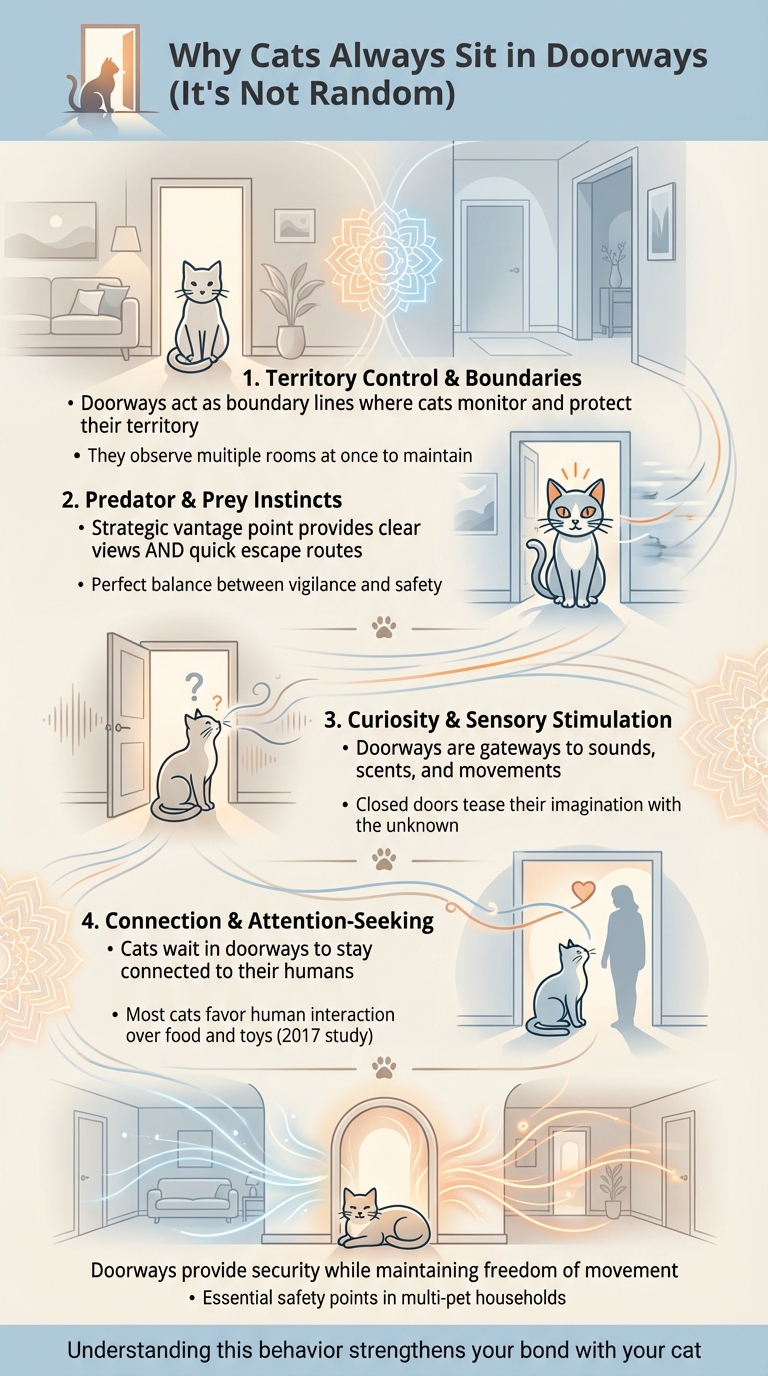
5 Gründe, warum Katzen in Türrahmen sitzen: Instinkte und Verhaltensweisen erklärt
Wie Katzen Türrahmen als Territoriumsgrenzen sehen
Beobachten und ihren Raum beanspruchen
Für Katzen ist jeder Winkel Ihres Zuhauses Teil ihres persönlichen Territoriums – ein Bereich, den sie instinktiv überwachen und schützen. Türrahmen dienen insbesondere als unsichtbare Grenzlinien und bieten ihnen einen erstklassigen Standort, um Kontrolle auszuüben und die Aktivität um sich herum zu beobachten.
Wenn Ihre Katze in einem Türrahmen sitzt, faulenzt sie nicht nur – sie verfolgt Geräusche, Gerüche und Bewegungen aus mehreren Räumen. Dieser Ort bietet ihr eine strategische Sicht auf ihr Revier, sodass sie informiert und in Kontrolle bleibt. Für Ihre Katze enthält jeder Raum wichtige Ressourcen wie Futter, Wasser oder gemütliche Ruheplätze. Indem sie Türrahmen bewacht, sichert sie sich ununterbrochenen Zugang zu diesen Notwendigkeiten.
In Haushalten mit mehreren Katzen werden Türrahmen oft noch wichtiger. Katzen können diese Räume nutzen, um Dominanz zu zeigen oder den Zugang zu bevorzugten Bereichen zu kontrollieren. Dieses Verhalten hat nichts mit Konflikten zu tun, sondern ist eine natürliche Art, wie sie ihre gemeinsame Umgebung verwalten und das Gleichgewicht aufrechterhalten.
Wilde Instinkte und Grenzschutz
Dieses territoriale Verhalten ist tief in den Instinkten Ihrer Katze verwurzelt. Wie Ingrid Johnson, eine Katzenverhaltensberaterin, betont:
"Katzen möchten den Zugang zu Räumen und lebenswichtigen Grundbedürfnissen und Territorium kontrollieren. Das macht sie nicht böse. Es macht sie nichts anderes als eine Spezies, die sowohl Raubtier als auch Beute ist, die jagen muss, um zu überleben, aber sich auch in ihrer Umgebung sicher und geborgen fühlen muss."
Katzen, die sowohl Jäger als auch potenzielle Beutetiere sind, sind darauf programmiert, ihre Umgebung ständig zu beobachten. Türrahmen bieten einen idealen Aussichtspunkt – einen Ort, von dem aus sie ihr Revier im Auge behalten können und bei Bedarf einen schnellen Fluchtweg haben. Diese Doppelrolle als Raubtier und Beutetier prägt einen Großteil ihres Verhaltens, wobei Türrahmen die perfekte Balance zwischen Wachsamkeit und Sicherheit bieten.
Wenn Sie eine Tür schließen, ist das für Ihre Katze mehr als nur eine kleine Unannehmlichkeit. Für sie ist es der Verlust eines Teils ihres Territoriums. Katzen verstehen nicht, dass eine geschlossene Tür nur vorübergehend ist. Wie Jocelyn Strassel, eine zertifizierte Tierarzthelferin, erklärt:
"Das Schließen von Türen schränkt ihr Territorium ein, was Angst verursachen kann."
Aus der Sicht Ihrer Katze wurde ein einst zugänglicher Teil ihrer Welt plötzlich weggenommen, was zu Stress und der bekannten Katzenfrustration führen kann. Diese Störung fordert das Gefühl von Stabilität und Kontrolle heraus, das sie in ihrer Umgebung aufrechtzuerhalten versuchen. Das Verständnis dieses instinktiven Bedürfnisses hilft uns zu schätzen, wie Katzen mit den Räumen um sie herum interagieren.
Türrahmen als Portale: Neugier und Erkundung
Katzen sind Meister darin, sich mit ihrer Umgebung auf eine Weise auseinanderzusetzen, die sowohl ihre territorialen Instinkte als auch ihre natürliche Neugier widerspiegelt. Türrahmen üben dabei eine besondere Anziehungskraft aus und dienen sowohl als Beobachtungsposten als auch als sensorische Spielplätze.
Der beste Platz zur Beobachtung
Ein Türrahmen wird oft zum Lieblingsplatz einer Katze, weil er Zugang zu zwei Welten gleichzeitig bietet. Direkt in der Türschwelle sitzend, kann Ihre Katze das geschäftige Treiben in der Küche beobachten und gleichzeitig die ruhigeren Vorgänge im Wohnzimmer verfolgen. Dieser Ort ermöglicht es ihr, mehrere Bereiche ihres Zuhauses zu überblicken, was ihr ein Gefühl der Kontrolle über ihre Umgebung gibt. Es geht nicht nur darum, informiert zu bleiben – es geht darum, ihre Rolle als wachsame Aufseher ihres Territoriums zu behaupten.
Dieser einzigartige Blickwinkel befriedigt auch ihr Bedürfnis, neugierig und engagiert zu bleiben. Indem sie sich an einem solch strategischen Ort positionieren, können Katzen sich mit allem um sie herum verbunden fühlen, ohne sich zwischen Räumen entscheiden zu müssen.
Ihre Sinne anregen
Türrahmen sind nicht nur Orte zum Beobachten; sie sind Tore zu einer Welt voller sensorischer Erlebnisse. Jedes Geräusch, jeder Geruch oder jede Bewegung, die durch eine offene oder teilweise geschlossene Tür dringt, wird zu einem Rätsel, das darauf wartet, gelöst zu werden. Eine geschlossene Tür ist besonders unwiderstehlich – sie reizt ihre Fantasie mit dem Unbekannten. Wie Amber Zawrotny, eine zertifizierte Verhaltensforscherin und Trainerin bei der Animal Refuge League of Greater Portland, erklärt:
"Das gilt besonders, wenn sie Geräusche hören oder Gerüche von der anderen Seite einer Tür wahrnehmen können. Sie erleben sogar Trennungsangst."
Eine geschlossene Tür könnte den schwachen Geruch von Futter, das Rascheln von Bewegung oder sogar das gedämpfte Geräusch von Stimmen verbergen. Für Katzen wecken diese sensorischen Hinweise ihren inneren Entdecker und Jäger und machen den Türrahmen zu einer unwiderstehlichen Herausforderung. Das Erkunden dessen, was dahinter liegt, ist nicht nur unterhaltsam – es ist eine Form der geistigen Übung, die ihre scharfen Instinkte wachhält.
Verbindung und Aufmerksamkeit durch Türrahmen suchen
Türrahmen sind nicht nur bequeme Sitzgelegenheiten für Ihre Katze – sie sind bewusst gewählte Treffpunkte, an denen Ihr Stubentiger Ihnen nahe sein kann.
Warten auf Ihre Rückkehr
Wenn Ihre Katze sich entscheidet, in einem Türrahmen zu sitzen, ist das oft ein Zeichen ihres Wunsches, mit dem Rhythmus des Haushalts verbunden zu bleiben. Diese Orte, durch die Menschen natürlich hindurchgehen, sind der perfekte Wartebereich. Dieses Verhalten ist besonders morgens auffällig, da viele Katzen sich vor Schlafzimmertüren niederlassen, begierig darauf, Sie als Erste zu begrüßen, wenn Sie aufwachen.
Diese Gewohnheit hängt mit dem zusammen, was einige Experten als „Feline FOMO“ bezeichnen, oder die Angst einer Katze, etwas zu verpassen, was ihre Lieblingsmenschen tun. Eine Studie aus dem Jahr 2017 in Behavioural Processes ergab, dass die meisten Katzen tatsächlich menschliche Interaktion anderen Reizen, einschließlich Futter und Spielzeug, vorziehen. Indem sie in einem Türrahmen sitzt, stellt Ihre Katze sicher, dass sie keinen Moment Ihrer Aktivität verpasst, und verbindet ihre territorialen Instinkte mit ihrem Bedürfnis, an Ihrem täglichen Leben teilzuhaben.
Von dieser Warteposition aus geht Ihre Katze oft dazu über, direktere Interaktion zu suchen.
Momente der Interaktion schaffen
Türrahmen werden zu Bühnen, auf denen Ihre Katze um Aufmerksamkeit bittet und ihre Körpersprache und Positionierung nutzt, um zu kommunizieren. Wenn sie Ihnen den Weg versperrt, sendet sie eine klare Botschaft: Sie will Ihre Aufmerksamkeit. Ob sie sich an Ihren Beinen reibt, spielerisch schlägt oder Ihnen in die Augen blickt, diese Handlungen sind die Art Ihrer Katze, um einen Moment der Verbindung zu bitten.
sbb-itb-b6c1dc0
Türrahmen als sichere Zonen: Gleichgewicht und Energie
Lassen Sie uns untersuchen, wie Türrahmen, über die Verbindung und Beobachtung hinaus, als wesentliche Sicherheitszonen für Ihre Katze dienen. Diese Räume bieten eine beruhigende Mischung aus Sicherheit und Freiheit, die für das Wohlbefinden Ihrer Katze entscheidend sind.
Ein sicherer Beobachtungsplatz
Wenn Ihre Katze beschließt, sich in einem Türrahmen aufzuhalten, geht es nicht nur um Neugier – es ist eine strategische Entscheidung. Katzen, von Natur aus sowohl Raubtiere als auch Beutetiere, suchen instinktiv Orte auf, von denen aus sie ihre Umgebung beobachten können, während sie auf eine schnelle Flucht vorbereitet sind. Ein Türrahmen bietet diese perfekte Balance: einen klaren Blick auf mehrere Räume und einen einfachen Fluchtweg, falls nötig. Es ist, als ob der Türrahmen zu ihrem persönlichen Beobachtungsposten wird, der sie mit dem Rhythmus des häuslichen Lebens verbindet und sie gleichzeitig schützt.
Diese Rolle wird in Haushalten mit anderen Haustieren noch deutlicher. Wenn sich Ihre Katze in der Nähe eines Hundes oder einer anderen Katze unwohl fühlt, dienen Türrahmen als wichtige Sicherheitspunkte. Von diesem Vorteil aus kann sie potenzielle Bedrohungen im Auge behalten, während sie in sicherer Entfernung bleibt, mit mehreren jederzeit verfügbaren Fluchtwegen. Das Blockieren des Zugangs durch das Schließen von Türen kann dieses Gefühl der Sicherheit stören und oft zu sichtbarem Stress führen.
Energie und räumlichen Fluss spüren
Katzen sind unglaublich auf ihre Umgebung abgestimmt, einschließlich dessen, was Experten als „räumlichen Fluss“ bezeichnen. Dies ist die Fähigkeit, sich frei durch eine Umgebung zu bewegen, ohne sich gefangen zu fühlen. Türrahmen als Übergangsräume sind dafür ideal – sie ermöglichen Katzen, Veränderungen in Geräuschen, Gerüchen und Bewegungen aus verschiedenen Bereichen des Hauses wahrzunehmen.
Diese Räume repräsentieren auch die „drei K’s“ für Katzen: Wahl, Kontrolle und Veränderung. Türrahmen geben ihnen die Freiheit, zu erkunden oder sich zurückzuziehen, und bieten eine dynamische und dennoch sichere Grenze. Diese Freiheit befriedigt ihre angeborene Neugier und hilft ihnen, ein inneres Gleichgewicht zu bewahren. Wenn Türen jedoch geschlossen werden, wird dieses Gleichgewicht gestört, was oft zu Angstgefühlen führt. Wie die zertifizierte Tierarzthelferin Jocelyn Strassel erklärt:
"Das Schließen von Türen schränkt ihr Territorium ein, was Angst verursachen kann."
Die Angewohnheit Ihrer Katze, in Türrahmen zu verweilen, ist nicht zufällig – es ist eine bewusste Entscheidung, die ihr ein Gefühl von Sicherheit, Gleichgewicht und Kontrolle über ihre Umgebung gibt.
Umgang mit der Türrahmen-Gewohnheit Ihrer Katze
Katzen haben einen natürlichen Instinkt, sich in Türrahmen aufzuhalten, oft angezogen von Neugier, Beobachtung oder dem Wunsch, ihren Menschen nahe zu sein. Diese Gewohnheit kann sanft umgeleitet werden, um sicherzustellen, dass ihre Bedürfnisse erfüllt werden, während die Harmonie in Ihrem Zuhause erhalten bleibt.
Alternative Beobachtungspunkte schaffen
Katzen lieben es, an Orten zu sitzen, von denen aus sie ihre Umgebung beobachten können und sich gleichzeitig sicher fühlen. Um ihren Fokus von Türrahmen wegzulenken, sollten Sie Möbel umstellen oder einen Kratzbaum in der Nähe eines Fensters oder an anderen strategischen Orten aufstellen. Diese Stellen sollten ihnen weiterhin ermöglichen, das Geschehen im Haushalt im Auge zu behalten und sich mit Ihnen verbunden zu fühlen.
Machen Sie diese Bereiche einladend, indem Sie weiche Kissen oder Decken hinzufügen und gelegentlich Leckerlis oder Katzenminze dort platzieren, um die Erkundung zu fördern. Indem Sie diese Orte in gemütliche, lohnende Räume verwandeln, wird Ihre Katze im Laufe der Zeit natürlich dorthin gravitieren, was ihre Fixierung auf Türrahmen reduziert.
Positive Verstärkung nutzen
Sobald neue Beobachtungspunkte bereit sind, helfen Sie Ihrer Katze, den Übergang durch positive Verstärkung zu vollziehen. Wenn sie in einem Türrahmen verweilt, führen Sie sie sanft mit einem Lieblingsspielzeug oder Leckerli zum neuen Standort. Wenn sie sich zum gewünschten Ort bewegt, belohnen Sie sie sofort mit Leckerlis, Lob oder Zuneigung.
Kristyn Vitale, PhD, eine zertifizierte angewandte Tierverhaltensforscherin, betont, dass Katzen Verhaltensweisen, die zu positiven Ergebnissen führen, eher wiederholen. Wenn sich das Entfernen vom Türrahmen zum Beispiel konsequent in Leckerlis oder Spielzeit niederschlägt, wird Ihre Katze dieses Verhalten öfter wählen. Sie können sogar üben, Türen zu öffnen, während Ihre Katze an ihrer neuen „Station“ ist, und sie dafür belohnen, dass sie dort bleibt, anstatt zur Schwelle zu eilen. Dieser Ansatz stärkt Ihre Bindung und respektiert gleichzeitig die Instinkte Ihrer Katze.
Stress oder Angst angehen
In einigen Fällen kann die Angewohnheit einer Katze, in Türrahmen zu sitzen, auf Stress oder Angst zurückzuführen sein. Achten Sie auf Anzeichen wie übermäßiges Miauen, ständiges Folgen oder übermäßiges Putzen. Diese Verhaltensweisen könnten auf zugrunde liegenden Stress hindeuten, der Aufmerksamkeit erfordert. Cats.com merkt an:
"Es ist am besten, Anzeichen von Trennungsangst bei Ihrer Katze nicht zu ignorieren, da dies zu Stress führen kann, der gesundheitliche Probleme wie Zystitis, Blasenverschluss und übermäßiges Putzen verursachen kann."
Um Stress zu reduzieren, stellen Sie sicher, dass Ihre Katze über klare Fluchtwege und Zugang zu erhöhten Sitzgelegenheiten verfügt, insbesondere in Haushalten mit mehreren Haustieren. Die Einführung neuer Erfahrungen – wie Puzzlespielzeug, leere Kartons oder interessante Gerüche – kann auch mentale Stimulation bieten und Angst reduzieren. Die zertifizierte Verhaltensforscherin Amber Zawrotny rät:
"Je zufriedener sie mit angemessenen neuen Erfahrungen sind, desto unwahrscheinlicher ist es, dass sie anderswo Ärger machen."
Wenn das Verhalten Ihrer Katze destruktiv oder hartnäckig wird, konsultieren Sie einen Tierarzt oder einen zertifizierten Katzenverhaltensforscher, um medizinische Bedenken oder tiefere Angstprobleme auszuschließen. Ein maßgeschneiderter Ansatz kann helfen, das Gleichgewicht wiederherzustellen und sicherzustellen, dass Ihre Katze sich sicher und zufrieden fühlt.
Das Verständnis dieses Verhaltens stärkt Ihre Bindung
Wenn Sie sich einen Moment Zeit nehmen, um das Verhalten Ihrer Katze zu verstehen – insbesondere ihre Angewohnheit, in Türrahmen zu verweilen –, kann dies Sie enger zusammenbringen. Was wie eine frustrierende Eigenart erscheinen mag, ist tatsächlich ein Einblick in ihre einzigartige Art, die Welt zu erleben. Indem Sie Ihre Perspektive ändern, können Sie Irritationen durch eine tiefere Wertschätzung ihrer Instinkte ersetzen.
Ihre Katze versucht nicht, Ihnen aus Sturheit den Weg zu versperren. Stattdessen spiegelt ihr Verhalten eine Mischung aus Neugier und einem natürlichen Gefühl für ihr Territorium wider. Wie Ownpets erklärt:
"Indem Sie diese Verhaltensweisen annehmen und verstehen, öffnen Sie die Tür zu einer lohnenderen und harmonischeren Verbindung mit Ihrer Hauskatze."
Dieses Verständnis ermöglicht es Ihnen, Ihre Katze als nachdenklichen Begleiter zu sehen, der seine Umgebung auf eine für ihn völlig logische Weise navigiert.
Wenn Ihre Katze in einem Türrahmen sitzt, ist sie nicht nur territorial – sie sucht auch nach Verbindung. Ihre Anwesenheit bestätigt Ihre Rolle in ihrer Welt. Ob es ein sanfter Kopfstoß ist, wenn Sie vorbeigehen, oder ihr stetiger Blick von der Schwelle, diese kleinen Momente sind ihre Art zu kommunizieren. Indem Sie innehalten, um dies zu bemerken, reagieren Sie auf ihre nonverbalen Hinweise und fördern ein tieferes Gefühl von Vertrauen und Verständnis.
Diese einfachen Rituale – wie das Anhalten, um ihnen hinter den Ohren zu kratzen oder ein freundliches Wort zu sagen – werden zu erdenden Momenten in Ihrem gemeinsamen Tag. Sie erinnern Sie daran, langsamer zu werden und sich zu verbinden, ähnlich wie Katzen es tun, wenn sie ihre Umgebung aufmerksam beobachten.
Die Wertschätzung dieser Verhaltensweisen offenbart mehr über die Persönlichkeit Ihrer Katze und ihr Bedürfnis nach emotionaler Sicherheit. Jede Türrahmen-Pause oder jedes geduldige Warten ist ein Spiegelbild ihrer Bindung zu Ihnen und ihrer Rolle als stiller Beobachter in Ihrem Zuhause. Das Erkennen und Wertschätzen dieser Momente stärkt das Vertrauen und die Verbindung, die Sie teilen, und macht Ihre Beziehung noch bedeutungsvoller.
Häufig gestellte Fragen
Ist es ein Zeichen von Angst, wenn meine Katze in Türrahmen sitzt?
Dass Katzen in Türrahmen sitzen, ist oft kein Grund zur Sorge. Dieses Verhalten resultiert aus ihrer angeborenen Neugier und ihrer Vorliebe, ihre Umgebung von einem sicheren, Übergangsort aus zu beobachten. Türrahmen bieten einen idealen Aussichtspunkt, um verschiedene Bereiche im Auge zu behalten und gleichzeitig bequem positioniert zu sein. Wenn diese Angewohnheit jedoch mit Verhaltensweisen wie übermäßigem Verstecken, ständigem Kratzen oder lauten Vokalisationen einhergeht, könnte dies auf zugrunde liegenden Stress hindeuten. Meistens ist das Sitzen in Türrahmen jedoch einfach die Art Ihrer Katze, aufmerksam zu bleiben und sich in ihrer Umgebung sicher zu fühlen.
Wie kann ich meine Katze sicher davon abhalten, Türrahmen zu blockieren?
Wenn Ihre Katze die Angewohnheit hat, Türrahmen zu blockieren, gibt es einige praktische Schritte, die Sie unternehmen können, um dieses Verhalten zu kontrollieren. Eine Möglichkeit ist die Verwendung von physischen Barrieren, wie z.B. Babygittern, oder sie in einem bestimmten Raum einzusperren, wenn der Türrahmen frei bleiben muss. Dies kann besonders hilfreich sein in geschäftigen Momenten, in denen die Gefahr besteht, dass sie herausrutschen oder im Weg stehen.
Um die Gründe für ihr Verhalten anzugehen, sollten Sie ihr ansprechendes Spielzeug zur Verfügung stellen oder einen speziellen Spielbereich einrichten. Katzen blockieren Türrahmen oft aus Neugier oder dem Wunsch nach Aufmerksamkeit, daher kann eine Umleitung ihres Fokus einen großen Unterschied machen. Durch die Kombination dieser Strategien können Sie eine sicherere und harmonischere Umgebung für alle Beteiligten schaffen.
Wann sollte das Sitzen im Türrahmen ein Anliegen für Tierärzte oder Verhaltensforscher sein?
Wenn das Sitzen Ihrer Katze in Türrahmen von Anzeichen von Stress, medizinischen Problemen wie unpassendem Urinieren oder Verhaltensauffälligkeiten wie Aggression oder Angst begleitet wird, könnte es an der Zeit sein, einen Tierarzt oder einen Verhaltensforscher zu konsultieren. Diese Verhaltensweisen könnten auf tiefere Gesundheits- oder emotionale Probleme hinweisen, die über typische Neugier oder territoriale Instinkte hinausgehen. Das Beachten dieser Anzeichen kann dazu beitragen, das Wohlbefinden Ihrer Katze zu gewährleisten.


Einen Kommentar hinterlassen