

Mandalas aren’t just beautiful - they’re tools for mindfulness and emotional balance. Using specific colors in mandala art can help reduce stress, improve focus, and deepen meditation. Colors like blue and green calm the mind, while red and yellow boost energy and creativity. Whether you’re coloring, creating, or simply observing mandalas, they bring structure and intention to your meditation practice.
Here’s what you’ll learn:
- How colors like blue (calm) or red (energy) affect your mood.
- The science behind mandala coloring for stress relief.
- Tips for choosing colors to match your meditation goals.
Looking to enhance your meditation space? Blululi offers over 3,000 mandala-inspired designs, from wall art to yoga mats, all crafted to support mindfulness and well-being.
Color Psychology in Mandala Art
Colors have a profound influence on our emotions and mental states, especially in mandala art. Each shade carries its own energy and symbolism, making your choice of colors just as meaningful as the design itself. By understanding how colors affect your mood, you can create mandalas and meditation spaces that align with your intentions and enhance your well-being.
Color Meanings in Mandalas
Every color in a mandala holds a unique significance, shaping the emotional and symbolic tone of the artwork. Here's a closer look at what these colors represent and how they can influence your meditation practice:
- Red: A color of passion and vitality, red sparks motivation and courage. It's perfect for moments when you need energy and focus.
- Blue: Known for its calming and healing qualities, blue fosters inner peace and emotional balance, making it ideal for relaxation-focused spaces.
- Yellow: This cheerful color radiates joy and mental clarity, enhancing learning and boosting optimism. Use it in spaces where you want to feel uplifted and sharp.
- Green: Representing balance and harmony, green is deeply connected to nature and emotional renewal. It’s a great choice for grounding and healing energy.
- Purple: Often linked to spirituality and intuition, purple encourages deep meditation and sparks imagination, making it a favorite for spiritual practices.
- White: Symbolizing purity and clarity, white invites mental openness and helps clear distractions, supporting spiritual awakening.
- Black: A color of mystery and depth, black adds grounding energy and encourages introspection while bringing sophistication to designs.
- Orange: This vibrant hue enhances creativity, self-awareness, and transformation, while also promoting a sense of warmth.
- Pink: Associated with love and intuition, pink fosters a sense of connection and emotional harmony.
- Golden tones: Reflecting the energy of the sun and fire, golden hues symbolize vitality and transformation.
| Color | Emotion | Ideal for |
|---|---|---|
| Red | Passion, energy, courage | Boosting motivation and alertness |
| Blue | Calmness, trust, healing | Relaxation and emotional peace |
| Green | Balance, harmony, renewal | Healing and emotional restoration |
| Yellow | Joy, optimism, intellect | Learning environments and mood lifting |
| Purple | Spirituality, intuition | Deep meditation and spiritual practice |
How Colors Change Mood and Mental States
While each color has its own meaning, their combined effects can create dynamic shifts in your emotional state. Studies show that color influences up to 90% of first impressions, demonstrating its powerful impact on how we feel and perceive our surroundings.
Warm colors - like red, orange, and yellow - bring energy, excitement, and happiness. These shades can make spaces feel intimate and vibrant, ideal for boosting motivation or fostering social connections. Interestingly, warm hues can also make objects appear closer and more prominent, adding a sense of engagement to the environment.
Cool colors - such as blue, green, and purple - tend to calm the mind and encourage introspection. They’re perfect for creating tranquil spaces that promote relaxation and focus. Beyond their visual appeal, these colors also influence how we experience a space emotionally and psychologically.
For example, red is known to enhance focus and clarity, while blue inspires creativity and calmness. Activities like coloring mandalas amplify these effects, as the repetitive and deliberate act of choosing and applying colors helps reduce stress and anxiety.
"Coloring mandalas allows the brain to enter a peaceful state and to be focused on filling in the geometrical shapes instead of thinking about their worries." - Carl Jung
Carl Jung and Mandalas in Psychological Healing
Carl Jung, the renowned Swiss psychiatrist, was one of the first to explore the therapeutic potential of mandalas and color psychology. Through his personal practice, Jung discovered that mandalas could reflect his emotional state and help him process complex feelings.
"I sketched every morning in a notebook, a small circular drawing, a mandala, which seemed to correspond to my inner situation at the time." - Carl Jung
Jung observed that the colors and patterns he chose revealed insights into his subconscious mind. This led him to use mandalas as a form of art therapy, helping his patients express emotions that were difficult to articulate. The act of creating mandalas within the structured circle provided a safe and meaningful way to explore their inner worlds.
Jung believed that colors held deep psychological connections to the unconscious, making them powerful tools for self-expression and emotional healing. His work highlights how intentional color choices in mandala art can deepen meditation and nurture emotional balance.
Picking the Right Colors for Your Meditation Space
Creating a meditation space is about more than just aesthetics - it’s about crafting an environment that aligns with your goals. The colors you select for your mandala art and meditation area can profoundly influence your mindset, guiding you toward relaxation, creativity, or balance. By thoughtfully choosing colors that match your intentions, you can design a space that fully supports your practice.
Choosing Colors Based on Your Goals
Your meditation goals should shape your color choices, as different shades naturally evoke specific feelings and mental states. Cool tones like blue and white are excellent for clarity and focus. These colors help quiet mental clutter, making them perfect for moments when you need to concentrate or tackle important decisions.
For emotional healing and balance, greens combined with blues create a soothing environment. Green, with its ties to nature, is grounding and restorative, while blue amplifies the calming effect, helping you find inner peace.
If creativity is your aim, turn to red. This bold hue sparks motivation and passion, energizing your artistic flow. Yellow, on the other hand, fosters optimism and intellectual stimulation, making it a great choice for learning or gaining clarity.
Purple is deeply associated with wisdom, imagination, and spiritual growth, making it ideal for meditative practices that involve introspection or connecting with your higher self. It encourages a sense of calm and deeper self-awareness.
"The process of making a mandala incorporates both symmetry and flow, and structure with flexibility. As we play and explore through art, within the safety of the circle, the process calls on our ability to be resilient and accept the unexpected." - Izza Wei-Haas, Sage House Therapy
Once you’ve identified the colors that resonate with your goals, the next step is blending them into a cohesive palette to enhance your meditation experience.
Mixing and Matching Colors
Crafting a harmonious palette means understanding how colors interact. A limited color palette can create balance and symmetry, enhancing the meditative quality of both designing and viewing your mandala.
Stick to a consistent color scheme to maintain harmony in your space. Familiarity with color theory and the color wheel can help you select combinations that feel intentional and visually pleasing.
When blending colors, think about your emotional objectives. For instance, pairing the grounding qualities of green with the clarity of blue can create a space ideal for emotional healing. Meanwhile, combining the energizing warmth of yellow with the passion of red can fuel creativity and motivation.
Repetition is key - use the same colors for repeating patterns in your mandala. This creates a visual rhythm that encourages your mind to relax and focus, making it easier to enter a meditative state.
Once your palette is finalized, it’s time to bring those colors into your meditation routine.
Adding Mandala Art to Your Meditation Practice
Mandala art can enrich your meditation practice in several ways, each offering its own benefits. Creating or coloring mandalas is a meditative activity in itself, helping to reduce anxiety as you immerse yourself in the process of blending colors and patterns.
Focusing on intricate designs shifts your attention away from stress, allowing your mind to settle into a peaceful state. Whether you’re coloring or simply observing, mandalas can serve as a calming anchor.
Wall art featuring mandala designs can also act as a focal point during meditation. Choose pieces that reflect your chosen color palette to reinforce the energy you want in your space.
For a hands-on approach, printable mandala coloring books offer a creative outlet. Studies have shown that mandala coloring is more effective than free-form coloring in reducing stress and boosting happiness, particularly in individuals coping with challenges like PTSD. This structured creativity can help release tension and foster tranquility.
Floor cushions with mandala patterns provide both comfort and visual inspiration. Select colors that align with your goals - perhaps serene blues for relaxation or vibrant oranges for energizing sessions.
Start with intention. Before coloring or choosing a mandala, reflect on the energy or mood you want to cultivate. This mindful approach ensures your colors and designs truly support your meditation goals, transforming your space into a sanctuary of calm and creativity.
sbb-itb-b6c1dc0
Blululi's Mandala Art: Adding Color and Meaning to Your Space
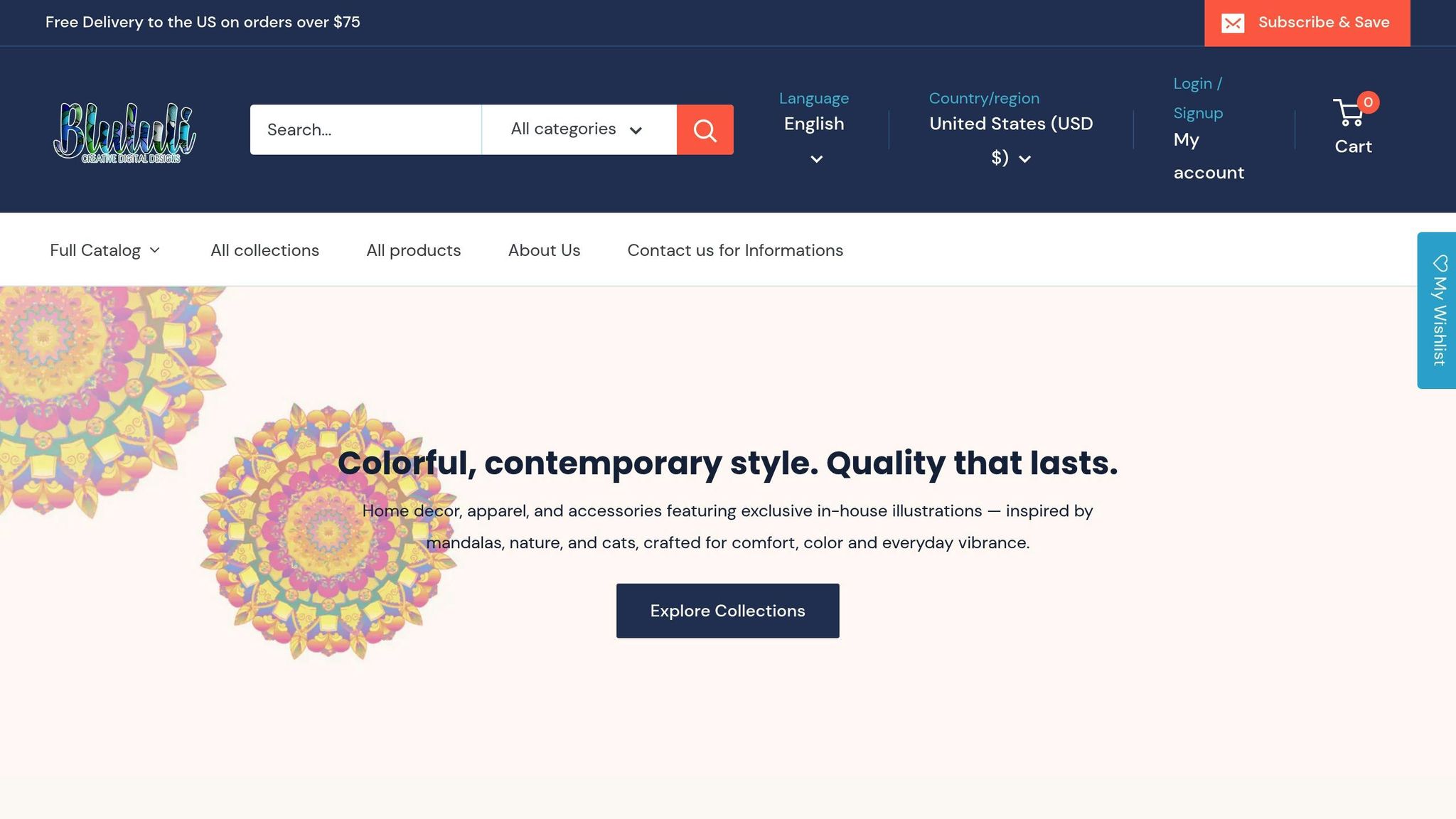
Transform your meditation practice with art that complements your journey. Blululi offers a stunning collection of over 3,000 lifestyle products, including hand-drawn mandala designs inspired by the principles of color psychology. Each piece is thoughtfully created to bring joy and mindful energy into your home.
Explore Blululi's Mandala Collection
Blululi’s mandala collection includes a variety of products designed to support and enhance your meditation practice.
Wall art featuring sacred geometry serves as a powerful focal point, helping to center your thoughts and elevate the energy of your meditation space. These designs are not only visually striking but also infused with intention, creating an atmosphere of mindfulness.
For a grounded and comfortable meditation experience, consider Blululi's floor cushions, starting at $51.40. Each cushion features intricate, hand-drawn mandala patterns that promote a sense of calm and balance. Select cool blues and whites for clarity and focus, or choose warm earth tones to encourage grounding and stability.
Yoga mats adorned with mandala designs combine beauty with practicality. The circular and repetitive patterns naturally guide you into a meditative state, making them perfect for active meditation practices.
Printable mandala coloring books offer a hands-on way to engage with mindfulness. Coloring these intricate patterns becomes a meditative act, helping to ease anxiety and restore emotional balance. The digital format ensures instant access, so you can incorporate this practice whenever you need a break.
Blululi also offers home decor items like pillowcases, blankets, and rugs, allowing you to bring mandala-inspired energy into every corner of your living space. Use warm-colored designs in social areas to encourage connection or cool tones in relaxation spaces to foster tranquility.
Each of these pieces does more than decorate - they create an environment that supports and deepens your meditative focus.
Incorporating Blululi Products in Your Meditation Space
Blululi’s mandala art can help you design a dedicated meditation space that encourages mindfulness. Start by choosing a focal point, such as a mandala wall art piece, to anchor your practice. Focus on the symmetry, colors, and shapes as you settle into your session.
Enhance your workspace or daily routine by placing a small mandala print on your desk or pairing it with a matching floor cushion. Coordinating colors, like soft greens and blues, can amplify feelings of emotional healing and harmony.
To build a meditation sanctuary, layer mandala elements gradually. Begin with a single standout piece, such as a wall hanging or cushion, and add complementary items like a patterned blanket or seasonal printable art. This layered approach creates a serene and intentional space without overwhelming your senses.
Why Choose Blululi for Mandala Art?
Blululi takes mandala art to a deeper level, offering more than just decorative pieces. Each design is hand-drawn and digitally refined, ensuring originality and a personal touch. This dedication to craftsmanship imbues every piece with the artist’s energy and intention.
The collection’s variety allows you to create a cohesive meditation environment that reflects your personal style. Whether you’re drawn to bold, energizing patterns or soft, calming designs, there’s something to align with your goals and aesthetic.
For those seeking flexibility, Blululi’s digital downloads provide instant access to mandala coloring books and printable art. These tools are perfect for moments when you need quick stress relief or a burst of creativity, allowing you to adapt your meditation practice to your schedule and needs.
Blululi’s thoughtful approach to design ensures that every piece resonates with specific intentions, supporting everything from emotional balance to spiritual growth. These aren’t just meditation accessories - they’re tools that seamlessly integrate mindfulness into your daily life, whether during a morning yoga session or an evening wind-down.
Available worldwide, Blululi’s mandala art invites you to bring intentional color and meaning into your space, enhancing both your practice and your everyday moments.
Conclusion: Bringing Mindfulness to Life with Mandala Art
Choosing colors intentionally in mandala art can elevate your meditation practice to a whole new level. By understanding how different colors impact your emotions and mindset, you're not just creating something visually appealing - you’re crafting a space that actively supports your well-being.
Key Points to Keep in Mind
The connection between color psychology and mandala art is backed by science. Research indicates that coloring mandalas can lower cortisol levels while boosting dopamine, helping to reduce stress and improve mood. This unique combination makes mandala art a powerful tool for both meditation and relaxation.
The benefits don’t stop at stress relief. Studies with veterans dealing with PTSD revealed that mandala coloring was more effective than free-form coloring in fostering happiness and emotional well-being. The structured, balanced design of mandalas appears to offer psychological advantages that unstructured art simply can’t replicate.
Carl Jung, a pioneer in using mandalas for therapy, highlighted their profound impact on self-discovery and emotional balance. Reflecting on his own practice of daily mandala sketching, Jung wrote:
"I sketched every morning in a notebook, a small circular drawing, a mandala, which seemed to correspond to my inner situation at the time. [...] Only gradually did I discover what the mandala really is: [...] the Self, the wholeness of the personality, which if all goes well is harmonious."
Your choice of colors can enhance these natural benefits even further. Blues and greens are ideal for cultivating peace and emotional healing, while oranges and yellows can encourage creativity and self-reflection. The secret lies in aligning your color palette with your specific meditation goals.
Mandala meditation also addresses a challenge many of us face today: staying present. Studies show that 47% of the time, our minds wander away from the current moment. The focus required to create or contemplate a mandala helps anchor your thoughts in the here and now, making it an effective tool for practicing mindfulness.
By blending artistic expression with scientific insights, every design and color choice can deepen your mindfulness journey. Incorporating mandala art into your meditation routine allows you to experience these benefits firsthand.
Discover Blululi's Products
At Blululi, we bring these principles to life with a collection of over 3,000 mandala-inspired designs. Each piece is thoughtfully crafted to turn the science of color psychology into practical tools for mindfulness.
Whether you’re drawn to grounding earth tones for stability, soothing blues for clarity, or vibrant patterns to spark creativity, Blululi’s designs are tailored to support your meditation and wellness goals. With so many options, you can create a meditation space that’s both meaningful and reflective of your personal style.
Explore the collection at Blululi.com and see how mandala art can add color, intention, and mindfulness to your everyday life. The choices you make today can help nurture your well-being for years to come.
FAQs
What colors should I use in my mandala to enhance my meditation practice?
Choosing colors for your mandala isn’t just about aesthetics - it can deepen your meditation by connecting with your intentions. Colors carry unique emotional and energetic qualities. For instance, red brings energy and passion, blue encourages relaxation and calm, yellow ignites feelings of joy and creativity, and green supports balance and renewal. Think about the mood or focus you want to cultivate during your meditation, and let that guide your color choices.
To create a balanced and cohesive design, stick to a simple palette of two to four colors. This keeps your mandala visually soothing while amplifying its emotional resonance. Whether your goal is to find peace, spark creativity, or center your thoughts, choosing colors with intention can transform your mandala into a meaningful tool for mindfulness and self-discovery.
How did Carl Jung use mandalas in psychological healing?
Carl Jung saw mandalas as profound representations of the Self - a way to achieve psychological harmony and a sense of completeness. He believed that creating mandalas allowed individuals to delve into their inner world, face hidden emotions, and bring clarity to their thoughts. This practice often became a pathway to personal transformation and emotional healing.
In therapy, Jung used mandalas as a tool to guide people toward connecting with their inner selves. By engaging with mandalas, individuals could integrate different facets of their psyche and find balance amidst life's complexities. For many, the act of drawing or meditating on mandalas evolved into a soothing, mindful ritual, fostering self-awareness and emotional resilience.
How does coloring mandalas help reduce stress and promote relaxation?
Coloring mandalas is a soothing way to ease stress, as it encourages mindfulness and offers a peaceful, creative outlet. The intricate, repetitive designs naturally draw your attention, helping your mind to unwind and release negative thoughts. This combination of structure and creativity makes it an excellent tool for calming anxiety, sharpening focus, and fostering a meditative state.
What sets mandalas apart from other forms of art is their unique blend of freedom and order. As you select colors and fill in the detailed patterns, you create a sense of harmony and calm within yourself. This makes mandala coloring an ideal activity for relaxation and quiet introspection.


Leave a comment