

When a stray cat appears at your door, it’s often more than a coincidence. Across cultures, cats are seen as symbols of protection, intuition, and even prosperity. Whether it’s a quiet moment of comfort or a sign of upcoming change, these visits carry a sense of mystery and meaning. Cats are known for their ability to sense energy, offering spiritual guidance and sometimes even clearing away negativity. Their presence could signify good fortune, balance, or a reminder to trust your instincts.
 Shop now $33.99
If you’re wondering what to do, start with simple steps: observe the cat’s behavior, offer food and water, and check for signs of health or ownership. Each interaction can deepen your connection, whether you decide to care for the cat temporarily or welcome it into your home permanently. Stray cats often arrive during transitional times in life, bringing subtle lessons about patience, mindfulness, and compassion. These unexpected encounters can enrich your life in ways you might not expect.
Spiritual Meanings: What a Stray Cat's Visit Might Signal
When a stray cat shows up at your door, it’s often seen as more than just a coincidence. Across many traditions, such visits are thought to carry a personal message, especially during times of uncertainty, loss, or change. The presence of the cat may encourage you to look beyond the surface and consider the deeper, unseen aspects of your life. Let’s explore how these visits can symbolize luck, protection, and intuition.
Good Luck and Prosperity
In various cultural beliefs, cats are seen as symbols of good fortune. When a stray cat follows you or calmly enters your space, it’s thought to reflect a connection to your spiritual energy. This act of trust from the cat can be interpreted as a sign that you’re on the brink of a positive change, whether it’s an unexpected blessing or a shift in financial circumstances.
Protection and Guardian Energy
Cats have long been associated with clearing away negative energy. In Celtic folklore, they are linked to the "otherworld", acting as bridges between the physical and spiritual realms. Similarly, some Native American beliefs view cats as protectors of the home, their presence offering a kind of spiritual safeguarding.
If a stray cat chooses to settle near your door, it might be acting as a protective force, keeping harmful influences away. Even their purring is thought to have a soothing, almost healing quality, helping to calm stress and shift the energy around you from heavy to light. This dual role - guarding the external space and promoting internal balance - adds depth to their symbolic meaning.
A Message About Balance and Intuition
A cat’s visit can also serve as a reminder to find balance within yourself. Cats naturally embody harmony - they’re independent yet affectionate, alert yet relaxed. Their appearance may be a gentle push to trust your instincts, especially when logic alone isn’t offering clarity.
"The cat, a being of profound awareness, invites you to awaken to the unnoticed wonders of the world." - Spirit Animals Editorial Team
The timing of the visit can hold special significance. If the cat comes during a time of personal transition - like a career change, a shift in relationships, or a period of grief - it might be urging you to pause and listen more closely to your inner voice. The calm, observant nature of the cat can reflect the stillness needed to align your spiritual awareness with the demands of everyday life, offering a sense of guidance and reassurance in uncertain times.
sbb-itb-b6c1dc0
Cats and Wealth: The Money Connection
Throughout history, cats have been seen as symbols of prosperity. In ancient Egypt, their significance was so great that harming a cat, even unintentionally, was considered a crime punishable by death. Cats were revered as sacred guardians of the home and were closely tied to the goddess Bastet, who embodied fertility, domestic harmony, and protection from malevolent forces. This ancient link between cats and abundance still resonates today. Let’s delve into how folklore and the colors of cats continue to connect them to wealth and good fortune.
Folklore and Beliefs About Cats and Money
One of the most iconic symbols of cats and prosperity is the Japanese maneki-neko, or "beckoning cat." These figurines, often seen in homes and businesses, are believed to attract wealth, happiness, and good luck. With their distinctive raised paw, maneki-neko figures have become a global emblem of positive energy and financial success, extending far beyond Japan.
In Scottish and English traditions, the sight of a black cat at your doorstep is considered a sign of incoming prosperity. Similarly, in Latvian folklore, black kittens appearing in grain silos are thought to represent Rungis, the god of harvest, symbolizing the earth's capacity to provide abundance. Across these cultures, cats are not merely seen as lucky; they are thought to actively transform the energy of a space, creating an environment that invites success and opportunity.
What Cat Colors and Patterns Mean
The color and pattern of a cat’s fur are often associated with different forms of wealth and fortune:
- Calico cats are linked to unexpected blessings and transformative changes.
- Gold or yellow cats are thought to attract financial stability.
- White cats are connected to new income opportunities and positive energy.
- Black cats, despite their misunderstood reputation in some Western traditions, are seen in many spiritual contexts as protectors. They are believed to absorb negative energy, clearing the way for financial growth and good luck.
- Blue or grey cats are associated with career wisdom, helping to inspire sound financial decisions and boost savings.
Interestingly, when multiple cats are present, their symbolic meanings are believed to amplify, further enhancing their connection to wealth and fortune.
When More Than One Cat Visits
The arrival of multiple stray cats at your home is often seen as a spiritually significant event. While a single cat might bring a quiet message, a group of cats suggests a more urgent or powerful signal from the universe. This gathering is thought to represent a concentrated presence of spiritual energy around your home, indicating that your space has become a magnet for these selective creatures.
In many traditions, the appearance of three or more cats is believed to amplify their energy-clearing abilities, creating an atmosphere that invites success and prosperity. Such visits are particularly meaningful during periods of transition, such as career changes or personal milestones. Paying attention to their behavior - whether they linger near your doorway or lead you toward a specific area - can offer deeper insights into the type of abundance or protection they may be signaling. Their presence can serve as a gentle reminder to remain open to opportunities and trust the guidance they seem to bring.
How to Read the Spiritual Message Behind a Stray Cat's Visit
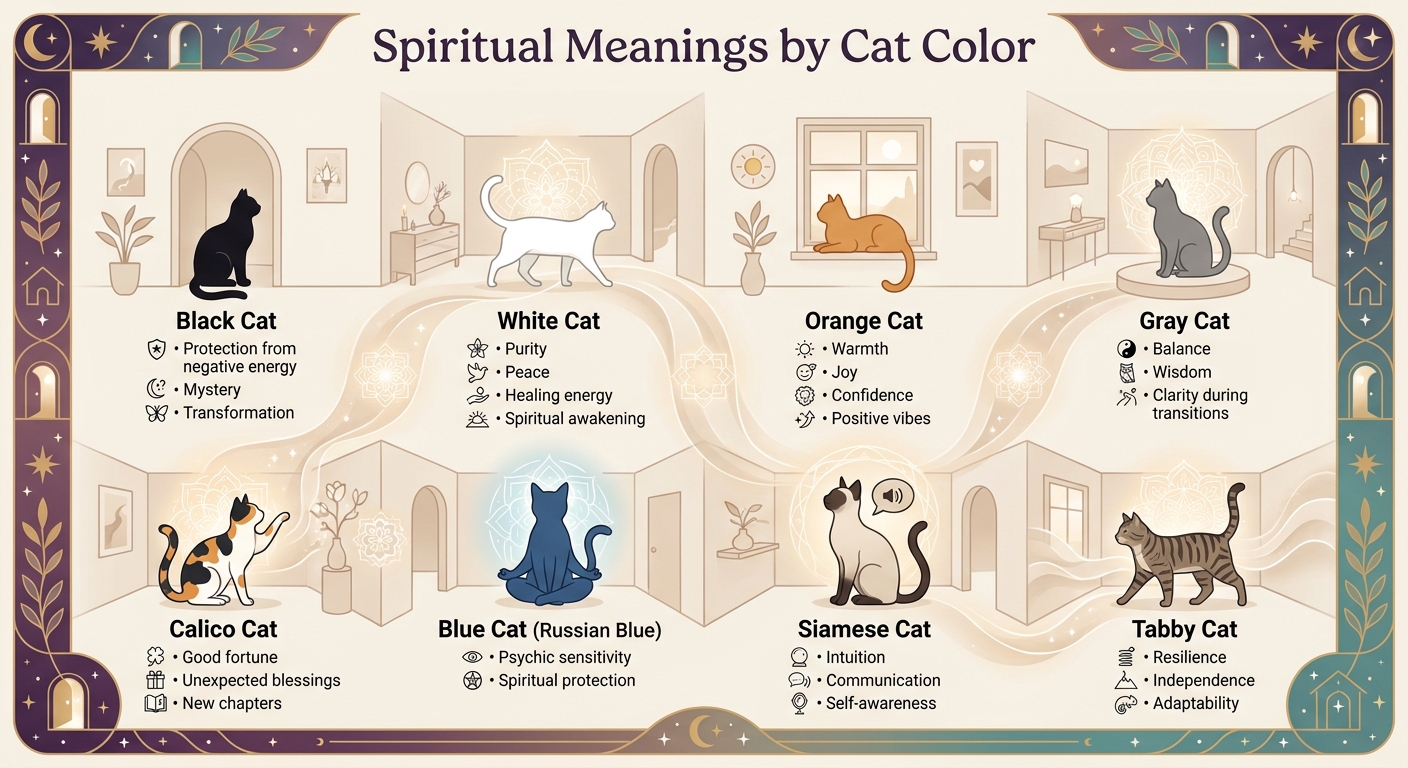
Spiritual Meanings of Cat Colors: Symbolism Guide
Reading the Cat's Behavior
When a stray cat crosses your path, its behavior can carry a deeper spiritual meaning, beyond the simple need for food or shelter. For instance, if a cat follows you, it might indicate a moment of change or transformation in your life. Cats are often thought to be highly attuned to energy, and this action could mean the animal senses something in your presence that resonates with it.
A stray cat's purring is more than a soothing sound - it can be a reminder to cultivate inner peace and mindfulness. If a cat purrs near you, it might be encouraging you to find calm and grounding, especially during turbulent times.
The way the cat approaches you is also significant. A bold and curious cat that strides forward may be nudging you to embrace vulnerability and step outside familiar boundaries. On the other hand, a cat that keeps its distance while remaining nearby might be teaching the importance of trusting your instincts and handling challenges with quiet confidence. As many cat enthusiasts know, earning a stray cat's trust is no small feat, and this process can mirror lessons about patience and self-awareness.
If a stray cat appears when you're wrestling with uncertainty or tough decisions, it could be a gentle prompt to listen to your intuition. Cats are often seen as mirrors, reflecting your emotional or mental state back to you. For example, a cat choosing to rest near your home might symbolize the need to create a space of comfort and self-care during stressful times.
Beyond behavior, the spiritual symbolism of cats through their appearance—color and number—can add further depth to their message.
Color and Number of Cats
The physical traits of a visiting cat can provide additional layers of meaning. A single cat often represents focused energy or a specific message. When three or more cats appear, it may signal that the spiritual guidance being offered is especially urgent or multifaceted.
The color of the cat also plays a role in interpreting its message. Each hue carries its own symbolism, and when multiple cats of differing colors visit, their meanings can blend. For instance, a black cat paired with a white one may combine themes of protection and healing, while an orange and gray duo might suggest the need to balance joy with wisdom.
Table: Spiritual Meanings by Cat Color
| Cat Color | Spiritual Meaning & Symbolism |
|---|---|
| Black | Protection from negative energy, mystery, and transformation |
| White | Purity, peace, healing energy, and spiritual awakening |
| Orange | Warmth, joy, confidence, and positive vibes |
| Gray | Balance, wisdom, and clarity during transitions |
| Calico | Good fortune, unexpected blessings, and new chapters |
| Blue (Russian Blue) | Psychic sensitivity and spiritual protection |
| Siamese | Intuition, communication, and self-awareness |
| Tabby | Resilience, independence, and adaptability |
Each encounter with a stray cat offers a unique opportunity to reflect on your current state of mind and the lessons life might be presenting. Whether through their behavior, color, or presence, these animals often carry messages that encourage self-discovery and growth.
How to Care for Stray Cats: A Step-by-Step Guide
Step 1: Check the Cat's Health and Needs
Caring for a stray starts with understanding its condition and behavior. Begin by observing the cat from a distance. Look for signs like ear tipping (indicating it has been spayed or neutered), a collar, or visible injuries such as limping, wounds, or discharge. These clues can help you determine if it has received prior care or needs immediate veterinary attention.
Pay close attention to its body language. A cat that sits calmly, blinks slowly, or keeps its tail relaxed likely feels more secure than one that crouches low with flattened ears or a puffed tail. These subtle signals can help you understand whether the cat is feral, semi-social, or possibly a lost pet.
Step 2: Offer Food, Water, and Shelter
Providing the basics - food, water, and shelter - can make a big difference in the cat's life. Place food and water in a quiet area where the cat feels safe. Cats prefer spots with a clear view of their surroundings and an easy escape route. Establish a routine by feeding at the same time each day in this secure location to encourage the cat to return.
If the weather is harsh, set up a simple shelter. A cardboard box lined with a blanket can provide warmth and protection. Place it in a covered, quiet spot where the cat can rest without feeling cornered or exposed.
Step 3: Earn the Cat's Trust
Gaining a stray cat's trust takes time and patience. Move slowly and avoid making direct eye contact, as this can feel intimidating to cats. Sit nearby and let the cat decide when to approach. Some cats may stay close but avoid physical contact - this is their way of testing whether they feel safe in your presence.
"They don't choose you like a dog would. But they do notice who moves slowly, who doesn't force interaction, and who feels easy to be around." - Blululi
Signs of trust include the cat grooming itself while you're nearby or offering a slow blink. These small gestures show it’s beginning to feel comfortable. Once trust is established, you can focus on determining whether the cat has an owner or needs further support.
Step 4: Look for an Owner or Contact Local Services
Before assuming the cat is homeless, check for signs of ownership. Post a photo on local community boards or social media groups that focus on lost pets. Contact nearby shelters and vet clinics to see if anyone has reported a missing cat matching its description. Many veterinary offices will scan for a microchip at no cost, which can quickly reunite the cat with its family.
If the cat keeps returning to your home - especially to the same spot - it might be treating your property as part of its territory. This behavior could indicate that the cat sees your space as a safe haven and may be seeking a permanent home.
| Action Step | Purpose | Practical Tip |
|---|---|---|
| Observation | Assess health/status | Look for ear tipping (spayed/neutered) or a collar. |
| Feeding | Build routine | Offer food at the same time daily in a quiet spot. |
| Trust Building | Reduce fear | Sit nearby without direct eye contact. |
| Vet Consultation | Ensure safety | Check for parasites, disease, and pregnancy. |
Once you’ve ensured the cat’s basic needs are met and verified whether it has an owner, you can prepare to bring it into your home if adoption feels right.
Step 5: Bringing the Cat Into Your Home
If you decide to adopt the stray, schedule a veterinary exam right away. The vet will check for parasites, diseases, and a microchip. This step is essential before introducing the cat to other pets or allowing it to roam freely indoors.
"When you take in a stray, be ready for vet visits, daily feeding, and forming a close bond. These tasks need true dedication and a caring heart." - Spirit Animals Editorial Team
Prepare a quiet, safe room where the cat can adjust to its new environment. Equip the space with a litter box, food, water, and a cozy spot for sleeping. Let the cat explore at its own pace, avoiding forced interactions. Some cats adapt quickly, while others may need weeks or even months to feel at ease. Respect their timeline, knowing that this journey involves daily care, emotional connection, and a long-term commitment to their well-being.
Creating a Deeper Connection with Stray Cats
Adding Cat Symbolism to Your Home
Beyond practical care, weaving elements of cat symbolism into your home can deepen your connection with a stray and enrich your shared experience. Consider adding cat-inspired art or mandalas that celebrate their tranquil and mysterious presence. These thoughtful touches can transform your space into a haven that mirrors the calming, almost mystical energy cats bring with them.
Notice where the stray cat naturally feels comfortable. Strays often choose spots that provide safety, a clear view of their surroundings, or a sense of security from potential threats. Keep this area quiet and undisturbed, allowing it to remain their sanctuary. In doing so, you’re not just offering a physical refuge but also showing the cat that your home is a safe and welcoming place.
Honoring the Spiritual Meaning
Recognizing the deeper meaning behind a stray cat’s visit can bring a sense of connection and reflection. For many, these encounters are seen as opportunities to pause and consider personal growth or spiritual insights. Reflect on what the cat’s presence might be teaching you and consider journaling your thoughts to explore these lessons more fully.
"There is something mystical in the silence of a cat's gaze, a silent invitation to look within and learn something profound about our very essence." - Spirit Animals Editorial Team
When you’re near the cat, practice mindfulness. Their presence can serve as a gentle reminder to stay present and attuned to the moment. Pay attention to their behavior - the way they communicate through whisker movements, tail flicks, or slow, deliberate blinks. These subtle gestures are part of a quiet exchange, where you offer care and safety, and in return, the cat shares a sense of companionship and perhaps even spiritual guidance. This mutual awareness can naturally grow into a bond filled with trust and affection.
Long-Term Care and Companionship
If the stray decides to stay and becomes part of your household, it’s important to prepare for the responsibilities that come with long-term care. Regular vet visits, consistent feeding routines, and emotional bonding will all play a role in building a healthy relationship. Interestingly, research shows that a cat’s purring frequency can promote relaxation, reduce stress, and even support physical healing - an example of how this connection benefits both you and the cat.
Respect the cat’s independence. Cats are unique in how they form relationships; they often maintain a balance between closeness and autonomy. For instance, a cat may prefer sitting nearby rather than on your lap, offering companionship on their terms. Allow the cat to set the rhythm of your interactions. By showing patience and respecting their boundaries, you create a bond rooted in mutual trust and understanding, one that honors both the practical and deeper dimensions of your connection.
Conclusion: The Quiet Presence of Stray Cats
When a stray cat finds its way to your door, it’s rarely just about food or shelter. These moments carry a spiritual significance, inviting you to pause and pay attention to the subtle shifts in your surroundings and within yourself. A cat’s presence, so unassuming yet profound, gently nudges you toward a state of mindfulness, urging you to observe and simply be present.
The practical act of caring for a stray - offering food, water, or a warm spot to rest - is deeply connected to something more emotional. It’s an opportunity to open yourself to vulnerability and compassion, creating a ripple effect that can touch other parts of your life. In welcoming a stray, you’re not just helping an animal; you’re nurturing a deeper sense of empathy and connection that can enrich your relationships and perspective on life.
These encounters often seem to align with pivotal moments - times of change, loss, or self-reflection. They remind you that life’s smallest events can carry meaning, weaving into the larger narrative of your journey. A stray cat’s decision to share its presence with you is a quiet affirmation of trust, urging you to listen to your own intuition. Their calm demeanor, slow blinks, and gentle purring serve as grounding reminders, helping you navigate life’s transitions with a steadier, more centered awareness.
FAQs
Is it a sign if a stray cat keeps coming back?
When a stray cat repeatedly shows up at your door, some people view it as a spiritual gesture or a message from the universe. This can be interpreted as a sign of guidance, protection, or an invitation to form a deeper connection. It’s often thought that the cat may have chosen you for a special reason, carrying a sense of purpose in its visits.
How can I tell a stray cat from a lost pet or feral cat?
To figure out whether a cat is a stray, a lost pet, or feral, pay close attention to how it behaves and looks:
- Lost pets are usually approachable and friendly. They might wear a collar and often appear clean or well-groomed, indicating they’ve been cared for recently.
- Feral cats generally avoid human contact, acting wary or skittish. Their appearance can be rougher, with a rugged or unkempt coat.
- Stray cats fall somewhere in between. They might seem cautious but not completely fearful, and may show signs of previous care, like a healthy coat or some level of comfort around humans.
These observations can give you clues about the cat’s situation and whether it might need your help.
What should I do before bringing a stray cat inside?
Before inviting a stray cat into your home, take some time to observe its behavior and overall health. Look for any signs of illness, injuries, or aggressive tendencies. A good way to start building trust is by offering food and water outside, allowing the cat to feel secure in your presence. Once the cat appears calm and healthy, schedule a visit with a veterinarian for a thorough check-up and necessary vaccinations. These careful steps ensure the cat’s well-being and help create a safe, welcoming space for it to settle in.
Related Blog Posts
- How One Cat Can Change the Energy of an Entire Home
- Why Cats Always Sit in Doorways (It’s Not Random)
- A Cat Moves Freely Where We Feel Divided
- From Inside to Outside: How Cats Bridge Two Worlds


Leave a comment