


Symbols of abundance, such as the Japanese Maneki-neko or the Norse Fehu rune, have long been used to represent wealth, growth, and balance. Across cultures, these symbols remind us to focus on opportunities and nurture a mindset of prosperity, whether through material success, emotional well-being, or harmonious living spaces.
The Maneki-neko, for example, is a cat figurine believed to attract good fortune, with its raised paw signaling specific intentions - financial luck, relationships, or protection. Similarly, the Fehu rune, rooted in Norse mythology, connects material wealth to the flow of resources, echoing the steady energy of Freya’s golden cats. These symbols, often paired with gemstones like citrine or jade, or living elements like lucky bamboo, offer ways to invite abundance into our homes.
Maneki-neko: The Japanese Beckoning Cat
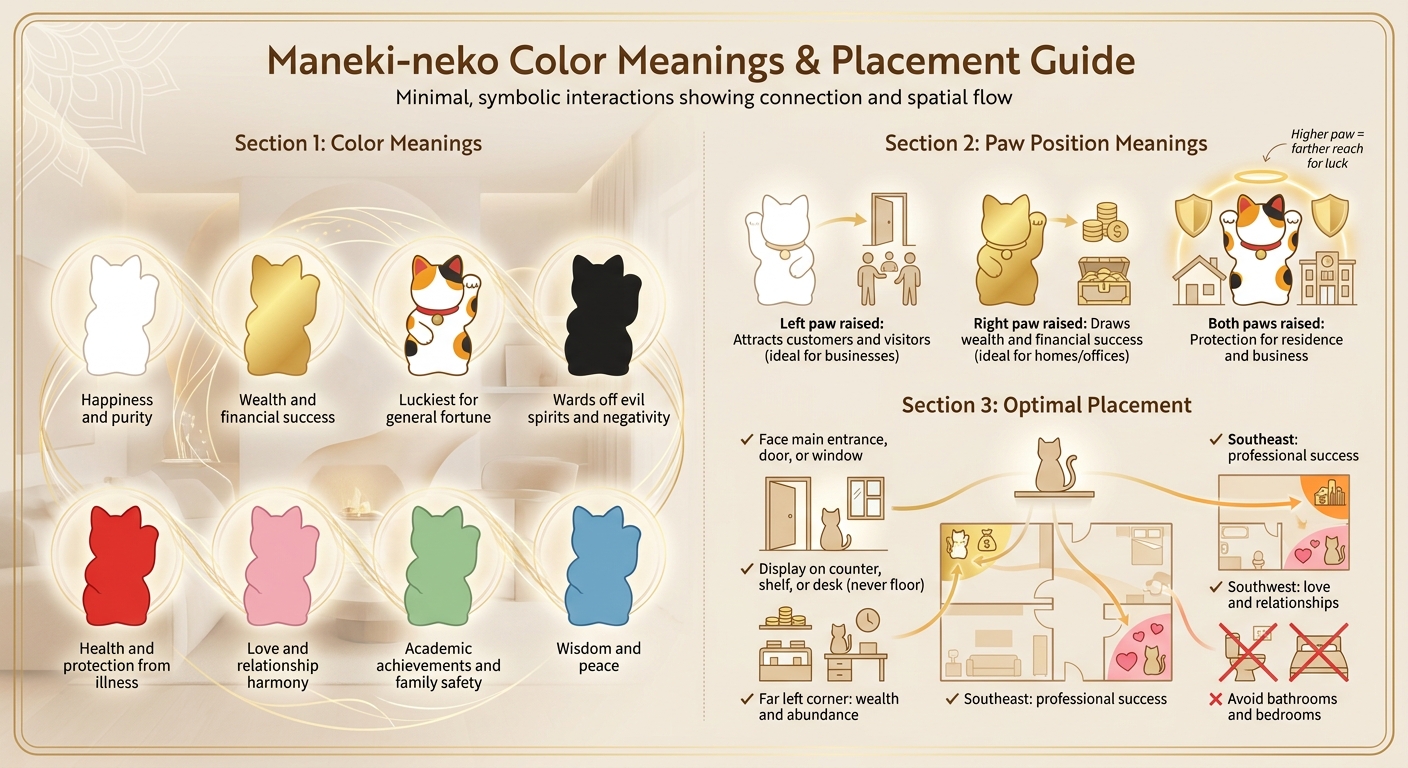
Maneki-neko Colors and Meanings Guide
The Maneki-neko, a familiar symbol of good fortune, first appeared in Japan's Edo period (1603–1868), particularly in Tokyo and Kyoto. Its iconic raised paw mimics a traditional Japanese gesture of beckoning, where the palm faces downward, and the fingers curl inward - a motion believed to invite prosperity and welcome.
One of the most well-known origin stories is tied to Gōtoku-ji Temple in Tokyo. According to legend, a 17th-century monk had a cat named Tama. One day, Tama raised its paw to beckon a passing lord, Ii Naotaka, into the temple. Moments later, lightning struck the spot where the lord had been standing. Grateful for the cat’s timely gesture, the lord became a patron of the temple, ensuring its future success. Today, Gōtoku-ji is home to countless Maneki-neko figurines, honoring Tama’s legacy.
The direction of the Maneki-neko's raised paw holds specific meaning. A left paw raised is said to attract customers and visitors, making it a popular choice for businesses. A right paw raised is believed to draw in wealth and financial success, making it ideal for homes or offices. Some figurines feature both paws raised, symbolizing protection for both a residence and a business. Additionally, the height of the raised paw is thought to correspond to the distance from which luck is being summoned - the higher the paw, the farther the reach.
Colors and Their Meanings
The Maneki-neko comes in a variety of colors, each with its own symbolism:
- White: Represents happiness and purity.
- Gold: Associated with wealth and financial success.
- Calico: Traditionally considered the luckiest for general fortune.
- Black: Wards off evil spirits and negativity.
- Red: Promotes health and protection from illness.
- Pink: Attracts love and harmony in relationships.
- Green: Linked to academic achievements and family safety.
- Blue: Symbolizes wisdom and peace.
Many of these figurines hold a koban, a gold coin from the Edo period, often engraved with "sen man ryou" (千万両), meaning 10 million gold pieces, further emphasizing wealth. Other adornments, like a bib or bell, reflect the cat’s esteemed status, while some figurines include a "magic hammer" that is said to bring riches to its owner. Professor Yoshiko Okuyama from the University of Hawaii at Hilo highlights the cultural significance of the Maneki-neko:
"The importance of maneki-neko lies in its mythologized power to bring good fortune to the caretaker."
Where to Place Your Maneki-neko
Understanding the origins and symbolism of the Maneki-neko is only part of its charm. Proper placement is key to unlocking its potential.
To attract positive energy, position your Maneki-neko facing the main entrance, door, or a window. This allows it to "welcome" prosperity into the space. Always display the figurine on a counter, shelf, or desk - never on the floor - to show respect and enhance its influence.
For specific intentions, consider these placements:
- Far left corner: Encourages wealth and abundance.
- Southeast: Supports professional success.
- Southwest: Ideal for love and relationship harmony, especially with a pink or dual-pawed figurine.
Traditions advise against placing the Maneki-neko in bathrooms or bedrooms, as these spaces are thought to diminish its energy. Keep the figurine clean and free of dust to maintain its effectiveness. In some traditions, gently "petting" the cat is believed to strengthen your connection and invite more luck. Should a Maneki-neko break, it’s customary to take it to a Buddhist temple or Shinto shrine for respectful disposal, rather than discarding it casually.
sbb-itb-b6c1dc0
Feng Shui Wealth Bowl: Combining Material and Emotional Prosperity
A Feng Shui wealth bowl is more than just a decorative piece; it’s a meaningful practice that blends ancient wisdom with tangible symbols of abundance. Unlike static ornaments, this tradition encourages you to actively shape your fortune by carefully selecting and layering items that represent stability, growth, and the flow of wealth.
To start, create a foundation of rice or salt, which symbolizes stability. Then, add coins and gemstones to represent the circulation of wealth. Green jade or yellow crystals are often chosen for their ability to amplify positive energy, while gemstones provide a grounding force for financial security. Some people include potted plants or dried flowers, representing vitality and continuous growth.
What makes the wealth bowl truly powerful is the personal intention you bring to its creation. FengshuiTell™ explains:
"Infusing personal positive energy and intentions during the making process enhances the Money Bowl's effectiveness."
As you assemble your bowl, consider meditating or offering a simple prayer. Visualize the bowl as a magnet for prosperity, with each item contributing to a flow of positive energy.
To add a unique touch, consider incorporating cat-inspired elements, drawing from the charm of the Maneki-neko. A small gold Maneki-neko with its right paw raised can be placed at the center of the bowl to specifically invite financial success. Cats are often seen as guardians of balance, with their calming purrs fostering peace and their playful nature energizing stagnant spaces. Chinese Feng Shui Master Xion Feng highlights this connection:
"A watchful cat, sitting calmly on a windowsill or at the foot of your bed, is seen as standing guard over the home and its people, keeping out negative energy."
You could also include miniature versions of traditional Maneki-neko symbols, such as a koban (gold coin for wealth), a sea bream (abundance), or a kozuchi (wish-granting mallet). These elements not only enhance material prosperity but also bring emotional warmth, reminding you that true wealth includes both financial stability and a harmonious home. This hands-on ritual weaves together symbols of abundance, encouraging a mindset of comprehensive prosperity.
How to Build and Activate Your Wealth Bowl
Before you begin, cleanse your bowl thoroughly with water and dry it completely to remove any lingering dust or stagnant energy. For optimal results, assemble your bowl during a New Moon, which is associated with fresh beginnings, or consult a Feng Shui calendar for "Auspicious Wealth Position Days." FengshuiTell™ suggests:
"Making a Money Bowl during [the new moon] can help attract new wealth and opportunities."
Start by spreading a base layer of rice or salt evenly at the bottom of the bowl. Arrange coins in a balanced pattern, then place crystals and gemstones along the edges. At the center, position a gold Maneki-neko with its right paw raised, facing toward the room to invite fortune. If you choose to use two cat figurines, face their raised paws outward to create a flow of wealth into the space between them.
Place the completed bowl in the Southeast corner of your home or living room, which is traditionally associated with wealth in the Bagua map. Ensure it’s on a high shelf or desk, and keep the surrounding area clean and uncluttered, as messiness can block the flow of fortune. Avoid placing the bowl near litter boxes, as they are thought to symbolize energy being drained away.
To maintain its energy, regularly check your wealth bowl to ensure it stays clean and dry. Refresh its contents seasonally to keep the energy vibrant. The Qingming Festival, a time for renewal and honoring the past, is an excellent opportunity to clear out old items and rearrange the bowl with fresh intentions for the future.
Citrine and Jade: Gemstones for Attracting Wealth
Citrine and jade have been cherished for centuries as symbols of prosperity, each offering its own unique energy. Citrine, often called the "merchant's stone", is a golden-hued quartz linked to the solar plexus chakra and the power of manifestation. Richard Webster, author of The Encyclopedia of Superstitions, explains:
"Citrine has been referred to as the 'merchant's stone' or 'money stone', due to a superstition that it would bring prosperity."
This gemstone is believed to dissolve mental barriers like imposter syndrome and sharpen awareness of financial opportunities. On the other hand, jade, especially green jade, is known as the "stone of opportunity." It is said to attract good fortune, foster harmonious energy in business, and promote emotional balance. Together, citrine brings the spark of manifestation, while jade provides the grounding stability needed for sustained growth - a combination that supports long-term prosperity.
Bringing these stones into your life can be done in creative and meaningful ways. Try wearing citrine or jade as jewelry, such as necklaces or bracelets, to keep their energy close throughout your daily routine. For your home, you can place these stones near symbols of abundance like a Maneki-neko, creating a designated area to focus on wealth and mindfulness. A small citrine chip tucked into your wallet or placed atop a savings jar can serve as a gentle reminder of mindful spending and saving. In workspaces, positioning citrine or jade on the left side of your desk - considered the "dragon side" in Feng Shui - may help attract career growth and supportive colleagues. These practices reflect the quiet, observant energy of cats, reminding us that prosperity often comes through patience and seizing the right opportunities. The natural imperfections and subtle variations in citrine and jade also emphasize their authenticity, adding to their charm. Once incorporated into your space, keeping them energetically cleansed will ensure they remain effective.
How to Cleanse and Use Prosperity Stones
To maintain their positive energy, regular cleansing and recharging are key. Gemstones absorb surrounding energy, so periodic cleansing helps them stay vibrant. For citrine, rinse it under running water for two minutes or soak it overnight in moon water - water infused with moonlight. Another option is passing the stone through sage or palo santo smoke for 15–30 seconds. You can also rest it on dry Himalayan salt for 24 hours or, for a deeper cleanse, bury it in uncooked brown rice for a day or in natural soil for at least three days. Jade can be cleansed in similar ways, but avoid prolonged exposure to salt, as it can damage delicate pieces.
Recharging your stones is just as important. Place them on a selenite charging plate or leave them under the light of a full moon overnight - doing this once a month helps maintain their energy. Citrine can also be recharged in sunlight for a few hours, though midday sun should be avoided to prevent fading. Alternatively, sound cleansing with a tuning fork, bell, or singing bowl for 5–10 minutes can refresh their energy.
When you're ready to work with your stones, hold them and set a clear intention. Visualize specific financial goals, whether it's a new income stream, a successful business endeavor, or simply cultivating an abundant mindset. Keep the stones where you'll interact with them daily - on your desk, in a pocket, or as part of a decorative wealth bowl. Regularly cleansing and recharging them strengthens your connection to abundance and reinforces the energy they bring into your life.
Cornucopia: The Horn of Plenty in Modern Practice
The cornucopia, with its deep roots in ancient Greece, has transformed over time from a mythological artifact into a widely recognized symbol of abundance. Its name comes from the Latin words cornu (horn) and copia (abundance). Greek mythology tells of Zeus, as an infant, being nursed by a goat named Amalthea. In one version of the story, Zeus accidentally broke off one of Amalthea’s horns, which then gained the magical ability to provide endless nourishment. Another version involves Heracles defeating the river god Achelous and breaking off one of his horns, further cementing the idea of the cornucopia as a source of limitless plenty.
Over the centuries, the cornucopia transitioned from a literal horn to the familiar horn-shaped wicker basket we see today, often brimming with fruits, vegetables, flowers, and grains. In North America, it has become a staple symbol of Thanksgiving and the autumn harvest. It also holds a place on the state seals of Idaho and North Carolina, symbolizing agricultural and mineral wealth.
However, the cornucopia’s meaning extends beyond material riches. It embodies ideas of fertility, fortune, and spiritual well-being - a constant flow of resources that can include food, security, and financial stability. In modern prosperity practices, the cornucopia is often paired with other symbols of abundance, such as the Maneki-neko or lucky stones, to amplify its energy. This brings us to an exciting concept: combining the cornucopia with cat-inspired elements to create a unique blend of Eastern and Western traditions.
Making a Cat-Themed Cornucopia
Drawing inspiration from the Maneki-neko, or "beckoning cat", a cat-themed cornucopia is a creative way to merge the traditional horn of plenty with feline symbolism. Begin with a horn-shaped basket as the base, symbolizing receptiveness to prosperity.
At the heart of this arrangement, place a Maneki-neko figurine. The choice of figurine can reflect specific intentions:
- A right paw raised signifies financial luck.
- A left paw raised invites positive relationships.
- Cats with their paws raised higher than their ears are thought to attract blessings from farther away.
The color of the Maneki-neko also holds meaning. Gold or yellow represents financial success, white is for general good fortune, and green is linked to health and safety. Surround this centerpiece with items that symbolize abundance: coins (such as koban coins traditionally inscribed with “ten million ryo”), fresh oranges for wealth, nuts and seeds for growth, and small treasure bags.
To add a lively touch, include a Money Tree (Pachira macrocarpa) or lucky bamboo stalks. These plants are celebrated in Feng Shui for their ability to attract wealth and maintain harmonious energy. You can also incorporate crystals like citrine or amethyst, which are often associated with manifesting financial success.
Where you place your cornucopia matters. Position it near the entrance of your home to welcome prosperity as it enters, or place it on your desk to encourage professional growth. According to Feng Shui, the Southeast corner of a room is the "wealth corner", making it an ideal spot for this arrangement. Keep the surrounding area tidy and clutter-free, as disorder can block the flow of positive energy.
Ganesha and Elephant Symbols: Connections to Cat Energy
Ganesha, the elephant-headed deity, is celebrated as the remover of obstacles and a symbol of wisdom and prosperity. His presence in mandala art often evokes a sense of calm and spiritual balance. Elephants, too, are seen as representations of strength, patience, and steady progress - qualities that align with the quiet, observant nature of cats.
At first glance, elephants and cats might seem like an unlikely pair, but both are associated with drawing in positive energy. In Hindu traditions, Ganesha and the Sri Yantra - a sacred geometric design of nine interlocking triangles - are used to promote both material and spiritual well-being. This intricate pattern is believed to create a balanced energy field that encourages success and inner harmony.
"The Sri Yantra generates a strong, balanced energy field with high oscillations and shall bring material and spiritual wealth and bless the user with peace, strength and success." – Thoth Adan
Cats also hold symbolic significance in other traditions. In Norse mythology, the goddess Freya rode in a chariot pulled by two golden cats, embodying fertility, abundance, and prosperity. Even today, golden cat figures are often placed near entrances to symbolize good fortune. This shared symbolism between Ganesha and cats invites creative ways to incorporate both into your surroundings. Together, they represent guardians of abundance, with Ganesha clearing the way and cats attracting opportunities.
Using Ganesha and Cat Motifs Together
Combining the energies of Ganesha and cats can enhance the flow of abundance in your space. Items featuring mandala designs, such as tote bags with intricate patterns or hand-drawn mandala stickers, provide a simple yet meaningful way to integrate these symbols into your daily life. The repetitive patterns of mandalas reflect natural order, promoting clarity and focus, especially during rituals centered on prosperity.
For optimal placement, consider Feng Shui principles. Position Ganesha art or cat-inspired mandala designs in the Southeast corner of your home or workspace - this area is known as the "wealth corner", tied to growth and abundance. Alternatively, placing these symbols in the North can help attract new career opportunities. Pair them with vibrant, living elements like Lucky Bamboo or jade plants to maintain a sense of vitality. Opt for matte-finished items to create a calming atmosphere, perfect for meditation or reflection. Whether it’s a geometric yoga mat or a mandala tumbler, these objects can serve as gentle reminders of abundance in your day-to-day life.
Blending these symbols not only enhances your décor but also harmonizes the energy in your space, creating an inviting environment for prosperity and balance.


Lucky Bamboo and Jade Plant: Living Symbols of Growth
Adding living elements like lucky bamboo and jade plants to your home brings a sense of vibrancy and movement to the idea of abundance. These plants symbolize growth and prosperity, thriving under your care and attention. Lucky bamboo is often paired with the Fu symbol to invite wealth, while jade plants, with their small, coin-like leaves, are believed to enhance the wood energy that represents vitality and prosperity.
"In Feng Shui wood is always associated with growth and vitality." – Thoth Adan
To maximize their benefits, place these plants in your home’s wealth area. This space, connected to the small wood element, is ideal for encouraging the flow of abundance. Pairing these plants with water elements - like decor in shades of marine blue or black - can further support this energy. For example, items such as a colorful mandala tote bag or a vibrant geometric yoga mat can subtly enhance this balance. Thoughtful placement of these plants aligns with Feng Shui principles, promoting harmony throughout your home.
Healthy plants are essential for maintaining positive energy. Display only thriving, vigorous plants, as withered or unhealthy ones can create blockages. Avoid plants with sharp leaves or thorns, as their harsh energy, called "Sha Qi", can disrupt the gentle flow needed for prosperity. Rounded-leaf plants are a better choice for maintaining a peaceful and balanced atmosphere.
Caring for and Placing Prosperity Plants
Caring for lucky bamboo and jade plants mirrors the steady effort required to achieve prosperity. These plants thrive with regular watering, indirect sunlight, and consistent attention.
If you share your home with a cat, consider placing these plants in areas that are out of your feline’s reach. Cats are naturally curious and may knock over pots or nibble on leaves. Elevated surfaces or spaces less frequented by your cat can help keep your plants safe. Choose stable, rectangular pots that align with the Wood element’s form and are sturdy enough to withstand playful paws. Like the careful placement of a Maneki-neko, these plants require thoughtful positioning to channel prosperity while maintaining a calm and protective energy.
To enhance the energy around your plants, incorporate accents in green, turquoise, or gold. Items like hand-drawn mandala stickers in these colors can subtly reinforce your intentions without overwhelming the space. Introduce one Feng Shui element at a time to allow the energy to settle before adding more. This gradual approach keeps your environment balanced and avoids feelings of clutter or chaos.
When nurtured with care, these living symbols beautifully complement your home’s abundance-focused design, creating a harmonious and inviting space.
Fehu Rune: Norse Symbol for Material Wealth
The Fehu rune comes from the ancient Norse runic alphabet and represents cattle, which were once a clear sign of wealth and resources. Its meaning extends to financial prosperity and the flow of material abundance, grounding its significance firmly in the physical world.
In Norse mythology, wealth is often associated with the goddess Freya, who is known for her chariot pulled by two golden cats. These cats have become symbols of Freya's prosperity and the energetic strength tied to material success.
"Freya's association with gold made her a symbol of riches and prosperity, and her golden cats came to represent material wealth and success." – Blululi
By combining the Fehu rune with imagery of cats, a fascinating link emerges between ancient Norse beliefs and modern practices like feng shui. For cat lovers, this blend offers a unique way to invite prosperity into their lives, much like the Maneki-neko, the Japanese beckoning cat, aligns with abundance.
To work with Fehu, incorporate colors like gold, purple, or green into your space. Gold reflects Freya's connection to wealth, while green symbolizes growth. Positioning the Fehu rune in the Southeast area of your home can enhance its energy, as this direction is traditionally associated with prosperity. Keeping this space organized and free of negative associations helps maintain a steady flow of abundance. These symbolic elements lay the groundwork for creating a meaningful ritual to invite wealth into your life.
Creating a Fehu Cat Talisman
You can craft a personal talisman that merges ancient wisdom with modern intentions for prosperity. Start with a small piece of wood or bamboo - both materials evoke natural growth and vitality. Carve or draw the Fehu rune on the surface, then add a simple cat silhouette or paw print to honor Freya's golden cats.
Alternatively, use a gold paint pen to draw the Fehu rune and a cat design on a stone or ceramic piece. Everyday items can also carry this energy - consider decorating them with gold, red, or green accents. For example, hand-drawn mandala stickers in these colors can subtly reinforce your focus on prosperity when placed in your workspace.
Once completed, place your talisman where it feels most natural in your daily life. You could keep it in your wallet to encourage consistent cash flow, set it on your desk in the Southeast corner for career-related wealth, or hang it near the front door to draw financial energy into your home. The key is to integrate it seamlessly into your routine, so its energy becomes part of your everyday environment.
Conclusion: Building an Abundance Mindset with Symbols
Symbols of abundance are far more than decorative items; they act as focal points, channeling energy to attract prosperity and balance. From the welcoming gesture of the Maneki-neko at your doorway to the Fehu rune rooted in Norse traditions, each symbol carries its own story and purpose, blending financial aspirations with emotional harmony.
"By focusing on these symbols, individuals can align their energy with the forces of abundance, creating a pathway for financial prosperity and personal fulfillment." – Blululi
The key lies in personal connection. Some may feel drawn to the warm glow of a citrine crystal, others to the steady growth of a jade plant, or perhaps a colorful mandala design that inspires mindfulness and focus. Selecting symbols that resonate with your beliefs enhances their influence, making them more than just objects - they become partners in your journey toward abundance.
As explored, whether it’s the energetic invitation of a Maneki-neko, the thoughtful arrangement of a Feng Shui wealth bowl, or the grounding presence of gemstones, these symbols share a common thread. They not only encourage material wealth but also support emotional and spiritual well-being.
Cats, in particular, embody a quiet yet potent sense of abundance. Their graceful presence and mindful nature serve as a reminder that prosperity is more than material gains - it’s about finding balance and peace. From the golden cats of Norse mythology to the cheerful Maneki-neko, these feline symbols bridge ancient wisdom with modern aspirations.
Incorporating these symbols into your space - whether through mandala-inspired art or cat-themed accents - sets the stage for positive energy to flow. Start simply, perhaps with a single symbol placed in your wealth corner (traditionally the southeast), and keep the area free of clutter. When thoughtfully integrated, these symbols become daily anchors, gently guiding your mindset toward prosperity and growth.
FAQs
What are symbols of abundance?
Symbols of abundance serve as powerful visual reminders, believed to draw wealth, prosperity, and uplifting energy into one’s life. Among the most recognized is the Money Tree, often associated with financial growth and stability. Another cherished symbol is the Laughing Buddha, representing joy and the promise of good fortune. The Mystic Knot, with its endless loops, is thought to bring continuous luck and positivity.
Mandalas, with their intricate and balanced designs, also play a role in fostering abundance. When paired with vibrant colors and soothing patterns, they help focus intentions and create a sense of harmony in a space, aligning it with the energy of prosperity. These symbols, whether displayed in homes or used during meditation, carry a quiet yet meaningful presence.
Which Maneki-neko should I choose for my goal?
The Maneki-neko, often called the 'lucky cat,' is widely recognized as a symbol of prosperity. If you're looking to attract wealth, a gold Maneki-neko is considered especially fitting. According to Feng Shui, placing it in the southeast corner of your home or workspace can maximize its influence. Additionally, selecting a color that reflects your specific intentions can enhance its energy, turning it into a meaningful charm for inviting abundance and good fortune.
Can I combine multiple abundance symbols in one space?
Combining various symbols of abundance can amplify the energy of prosperity and well-being in your space. For instance, pairing a money tree to symbolize growth, a frog to attract wealth, and a mandala for spiritual harmony creates a balanced and inviting atmosphere. Thoughtful placement is key - positioning a mandala near the entrance or placing lucky bamboo in your workspace can encourage a positive flow of energy, nurturing both material success and inner peace.


Leave a comment